
Signs Your HVAC Needs Replacement, A Complete Guide
Recognizing the Signs Your HVAC Needs Replacement is important as your HVAC system works tirelessly throughout the year to keep your home, office, retail space, or industrial facility comfortable. In Dubai, where temperatures remain high for a significant part of the year, an HVAC system is more than just a convenience—it’s an essential part of everyday life. Whether it’s a villa, apartment, hotel, restaurant, warehouse, or commercial building, reliable cooling directly affects comfort, productivity, and energy efficiency. However, like every mechanical system, an HVAC unit has a limited lifespan. As it ages, its performance gradually declines, repairs become more frequent, and operating costs continue to rise.
Many property owners struggle to decide whether they should continue repairing an aging system or invest in a replacement. While repairs may seem like the less expensive option initially, repeatedly fixing an outdated HVAC system often costs more in the long run. Increased electricity bills, recurring breakdowns, inconsistent cooling, and expensive replacement parts are all warning signs that your current system may no longer be the most economical choice.
Recognizing the Signs Your HVAC Needs Replacement early allows you to plan ahead instead of facing unexpected failures during the hottest months of the year. Replacing an inefficient system not only improves indoor comfort but also enhances energy efficiency, reduces maintenance costs, and provides greater reliability for years to come.
At Sahab Tech Group LLC, we specialize in professional HVAC Services Dubai, including inspections, maintenance, repairs, complete HVAC replacements, and energy-efficient system upgrades. With over 15 years of industry experience, our licensed technicians help residential, commercial, and industrial clients choose the right HVAC solutions for their specific requirements.
Why Replacing an Aging Unit Matters & Signs Your HVAC Needs Replacement
Many people continue repairing their HVAC system simply because it still turns on. Unfortunately, operating does not always mean operating efficiently. As HVAC equipment ages, internal components experience natural wear, electrical parts become less reliable, compressors lose efficiency, and airflow gradually declines. These changes often happen so slowly that property owners don’t immediately recognize the difference. Instead, they simply become accustomed to longer cooling times, higher electricity bills, and occasional repairs.
Replacing an aging HVAC system offers benefits far beyond improved cooling. Modern systems are designed with significantly better energy efficiency, advanced temperature control, quieter operation, and improved airflow management. As a result, they consume less electricity while delivering more consistent indoor comfort. For commercial buildings, efficient HVAC systems also contribute to better working conditions and improved customer experiences, making replacement a worthwhile long-term investment.
Older HVAC units also become increasingly expensive to maintain. Replacement parts may become difficult to source, repair frequency increases, and labor costs accumulate over time. Rather than repeatedly investing in temporary fixes, many property owners discover that installing a new system provides greater reliability and lower operating expenses over its lifespan.
At Sahab Tech Group LLC, our HVAC specialists evaluate each system carefully before recommending replacement. If a repair is genuinely the best solution, we will advise accordingly. However, when replacement offers better long-term value, we help clients choose energy-efficient HVAC systems that match their property’s cooling requirements and budget.
Benefits & Signs Your HVAC Needs Replacement
| Benefit | Why It Matters |
|---|---|
| Lower Electricity Bills | Improved energy efficiency reduces operating costs |
| Better Cooling Performance | More consistent indoor temperatures |
| Improved Indoor Air Quality | Enhanced filtration and airflow |
| Quieter Operation | Modern systems produce less noise |
| Reduced Maintenance Costs | Fewer unexpected repairs |
| Greater Reliability | Lower risk of summer breakdowns |
| Longer Equipment Lifespan | Years of dependable operation |
Understanding HVAC System Lifespan
Every HVAC system has an expected service life, although the exact lifespan depends on installation quality, maintenance history, operating conditions, and usage frequency. In Dubai, where air conditioning systems often run for extended periods due to the climate, HVAC equipment generally experiences more wear compared to cooler regions. This makes routine maintenance especially important for maximizing system longevity.
Most residential split air conditioning systems typically last between 10 and 15 years when properly maintained. Central HVAC systems, ducted units, and VRF/VRV systems can often operate efficiently for 15 to 20 years, provided they receive regular servicing and preventive maintenance. Commercial and industrial HVAC systems may have different lifespans depending on operating hours and maintenance practices.
Age alone does not necessarily mean a system should be replaced. A well-maintained HVAC unit may continue operating efficiently beyond its average lifespan, while a poorly maintained system could require replacement much earlier. This is why professional inspections play such an important role. Rather than guessing, experienced HVAC technicians evaluate cooling efficiency, compressor performance, airflow, electrical components, refrigerant condition, and overall system health before making recommendations.
Average HVAC Lifespan
| HVAC System | Typical Lifespan |
| Split AC | 10–15 Years |
| Central HVAC | 15–20 Years |
| Ducted AC | 15–20 Years |
| VRF / VRV System | 15–20 Years |
| Commercial HVAC | 15–25 Years |
| Industrial HVAC | 20+ Years (with maintenance) |
HVAC Lifespan Timeline
0 Years ───────────────► 5 Years
Excellent Performance

5 Years ───────────────► 10 Years
Routine Preventive Maintenance

10 Years ─────────────► 15 Years
Monitor Efficiency & Repair Costs

15+ Years
Professional Replacement Evaluation Recommended
14 Signs Your HVAC Needs Replacement
Not every HVAC problem requires a complete replacement. Many issues can be resolved through professional servicing or targeted repairs. However, when several warning signs begin appearing together, replacing the system often becomes the smarter financial decision. Understanding these early indicators allows property owners to avoid sudden breakdowns while planning upgrades on their own schedule. Recognizing these warning signs your HVAC needs replacement early can save you from costly mid-summer breakdowns.
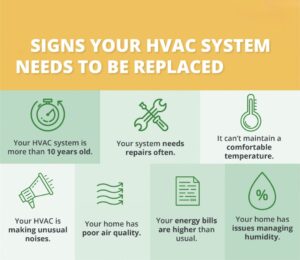
Poor Cooling Performance
One of the clearest Signs Your HVAC Needs Replacement is a noticeable decline in cooling performance. If your HVAC system runs continuously but still struggles to maintain comfortable indoor temperatures, the issue may extend beyond simple maintenance. Aging compressors, worn-out coils, declining refrigerant performance, and internal mechanical wear all reduce the system’s ability to cool efficiently.
Initially, homeowners may notice that rooms take longer to cool than they did in previous years. Over time, certain areas remain consistently warmer despite the system operating for extended periods. Businesses often experience similar issues in office spaces, restaurants, retail stores, and commercial buildings where uneven cooling affects employee comfort and customer satisfaction.
Before replacing the system, professional technicians should inspect filters, airflow, refrigerant levels, and electrical components. However, if multiple repairs fail to restore proper cooling performance, replacement becomes the more practical long-term solution.
Weak Airflow
Weak airflow is another common indicator that an HVAC system is approaching the end of its useful life. Reduced airflow makes cooling less effective, forcing the system to operate longer while consuming more electricity. Occupants may notice that air barely reaches distant rooms or that vents produce noticeably weaker airflow compared to previous years.
Several issues can contribute to this problem, including failing blower motors, damaged ductwork, clogged evaporator coils, dirty filters, or aging internal components. While some of these issues are repairable, persistent airflow problems in older systems often suggest that multiple components are deteriorating simultaneously.
Replacing an aging HVAC system restores proper airflow, improves indoor comfort, and allows conditioned air to circulate more efficiently throughout the property.
High Electricity Bills
Have your electricity bills increased even though your daily routine hasn’t changed? Rising utility costs are often one of the earliest financial indicators that an HVAC system is losing efficiency. As components wear out, the system requires more energy to produce the same cooling performance. Compressors work harder, motors consume additional electricity, and cooling cycles become longer than necessary. Spiking utility bills are often one of the main financial signs your HVAC needs replacement.
In Dubai, where air conditioning represents a significant portion of total electricity consumption, even small reductions in HVAC efficiency can noticeably affect monthly utility bills. Many homeowners mistakenly attribute rising electricity costs solely to seasonal weather, overlooking the gradual decline in HVAC performance.
Modern Energy Efficient HVAC Systems are designed to provide improved cooling while consuming significantly less electricity than older models. When high electricity bills coincide with frequent repairs and declining performance, replacement often becomes the more economical decision.
HVAC Health Score
| Performance Level | Condition |
| ⭐⭐⭐⭐⭐ | Excellent |
| ⭐⭐⭐⭐☆ | Good |
| ⭐⭐⭐☆☆ | Fair |
| ⭐⭐☆☆☆ | Poor |
| ⭐☆☆☆☆ | Replacement Recommended |
Frequent Repairs
Occasional HVAC repairs are completely normal during the lifespan of any system. However, when repair visits become increasingly frequent, they often indicate that the entire system is reaching the end of its operational life. Replacing one component may temporarily restore performance, only for another part to fail a few months later. Over time, these repeated repair costs accumulate and may exceed the value of keeping the old system in service. Paying for monthly service calls is one of the most obvious signs your HVAC needs replacement.
A useful guideline many property owners follow is comparing repair costs to replacement costs. If a major repair approaches a significant percentage of the price of a new system—especially on an older unit—replacement often provides better long-term value. A modern HVAC system not only reduces future repair expenses but also offers improved efficiency, quieter operation, and greater reliability.
At Sahab Tech Group LLC, we help clients evaluate repair history, system condition, and operating costs before recommending the most practical solution. Our goal is to ensure every client receives honest advice based on long-term performance rather than short-term fixes.
Strange Noises
An HVAC system should operate smoothly with a consistent background sound. If you suddenly begin hearing loud banging, rattling, squealing, grinding, buzzing, or clicking noises, your system is trying to tell you that something isn’t right. While some sounds may indicate a minor issue, persistent or increasingly loud noises often point to worn-out internal components that require immediate attention.
Grinding noises may suggest motor bearing failure, while banging sounds can indicate loose or broken internal parts. Squealing often points to worn belts or motor issues, and buzzing may be caused by electrical faults or failing capacitors. Ignoring these warning signs can allow small problems to develop into major system failures that are significantly more expensive to repair.
For residential properties, unusual HVAC noises can become disruptive to everyday comfort. In commercial buildings such as offices, hotels, restaurants, and retail stores, noisy equipment can negatively affect customer experience and employee productivity. If your HVAC system has already exceeded ten years of service and unusual noises continue appearing after repairs, replacement is usually the smarter long-term investment.
Bad Odors
Persistent unpleasant smells coming from your HVAC system should never be ignored. Musty odors often indicate mold or mildew inside ductwork or evaporator coils, while burning smells may signal overheating electrical components. A strong chemical odor could also suggest refrigerant leakage or deteriorating insulation around electrical wiring.
Although professional cleaning and maintenance can resolve many odor-related issues, recurring smells—especially in older HVAC systems—may indicate widespread internal deterioration. Moisture accumulation inside aging systems also increases the risk of microbial growth, reducing indoor air quality and creating an uncomfortable environment for occupants.
Installing a modern HVAC system not only improves cooling efficiency but also enhances indoor air quality through better filtration and airflow. For businesses where customer comfort is essential, replacing an aging system can significantly improve the overall indoor environment.
Uneven Temperatures Throughout the Building
Do some rooms feel perfectly comfortable while others remain noticeably warmer? Uneven temperatures are one of the most common Signs Your HVAC Needs Replacement, especially in larger villas, offices, hotels, and commercial buildings.
While poor duct design or blocked vents can contribute to uneven cooling, aging HVAC systems gradually lose their ability to distribute conditioned air evenly throughout the building. Worn blower motors, declining compressor efficiency, refrigerant problems, and failing dampers all reduce overall system performance.
A professionally designed replacement HVAC system restores balanced airflow and consistent temperatures across every room. This improves comfort while reducing unnecessary energy consumption caused by overworking the equipment.
Temperature Consistency Comparison
| Old HVAC System | New HVAC System |
|---|---|
| Hot and cold spots | Even temperatures throughout the building |
| Long cooling times | Faster cooling response |
| Uneven airflow | Balanced air distribution |
| Frequent thermostat adjustments | Stable indoor comfort |
Water Leaks Around the HVAC Unit
Water collecting around your indoor or outdoor HVAC unit should always be investigated promptly. Small leaks may simply result from blocked condensate drain lines, but persistent leakage can also indicate damaged drain pans, frozen evaporator coils, clogged drainage systems, or failing internal components.
Ignoring water leaks may cause damage to walls, ceilings, flooring, insulation, and nearby electrical systems. Over time, excessive moisture also encourages mold growth, creating additional maintenance costs and potential health concerns.
If repeated repairs fail to eliminate recurring water leaks, replacing an older HVAC system often becomes the most cost-effective long-term solution.
Refrigerant Leaks
Refrigerant is essential for transferring heat and cooling indoor spaces. When refrigerant begins leaking, the HVAC system loses efficiency and struggles to maintain comfortable temperatures. Property owners often notice longer cooling cycles, higher electricity bills, ice forming on evaporator coils, or poor cooling performance.
Although refrigerant leaks can sometimes be repaired, recurring leaks in older HVAC systems usually indicate significant wear within coils or refrigerant lines. Continuing to recharge refrigerant without addressing the underlying problem often results in unnecessary maintenance expenses.
Replacing an aging HVAC system eliminates recurring refrigerant problems while providing improved efficiency and more environmentally responsible operation.
Constant Cycling
Every HVAC system naturally cycles on and off throughout the day. However, if your unit starts turning on and off every few minutes—even under normal operating conditions—it may be experiencing short cycling.
Short cycling places excessive strain on compressors, electrical components, and motors. It also increases electricity consumption because the system repeatedly starts without completing efficient cooling cycles.
Possible causes include:
- Oversized HVAC equipment
- Compressor deterioration
- Faulty thermostats
- Refrigerant problems
- Electrical failures
- Aging internal components
If repeated servicing fails to correct short cycling, replacing the HVAC system is often the most reliable solution.
Humidity Problems
Dubai’s climate already presents humidity challenges, particularly during warmer months. Your HVAC system plays an important role in controlling indoor moisture levels alongside cooling the building.
If indoor air begins feeling unusually damp, sticky, or uncomfortable despite the air conditioner operating normally, the system may no longer remove humidity effectively. Excess humidity encourages mold growth, unpleasant odors, and reduced indoor comfort.
Modern HVAC systems include improved humidity management technologies that create healthier indoor environments while maintaining energy-efficient performance.
Thermostat Issues
Many people assume thermostat problems automatically require replacing the thermostat itself. While this is sometimes true, persistent temperature inconsistencies can also indicate deeper HVAC issues.
Common symptoms include:
- Incorrect room temperature readings
- HVAC fails to respond to thermostat settings
- Constant temperature fluctuations
- Delayed system response
- HVAC runs continuously
Professional diagnosis determines whether the thermostat, wiring, control board, or HVAC equipment itself is responsible. If multiple HVAC components are already aging, replacement often provides greater long-term reliability than repeated electrical repairs.
Electrical Problems
Electrical issues should never be ignored because they can affect both system reliability and safety. Frequent circuit breaker trips, burning smells, damaged wiring, failed capacitors, contactor failures, and intermittent power loss all suggest significant electrical stress within the HVAC system.
Older equipment naturally places greater demand on electrical components as motors and compressors wear over time. Rather than repeatedly replacing individual electrical parts, installing a new energy-efficient HVAC system often provides a safer and more dependable solution.
Professional inspections performed by experienced technicians help identify whether electrical problems can be repaired or whether replacement is the more economical choice.
Your HVAC System Is More Than 10–15 Years Old
Age alone doesn’t automatically mean replacement is necessary. However, when an HVAC system has exceeded 10–15 years and several warning signs begin appearing together, replacement usually becomes the most practical decision. System age combined with declining output are clear signs your HVAC needs replacement soon.
An older HVAC system typically experiences:
- Lower cooling efficiency
- Higher electricity consumption
- Increasing repair frequency
- Difficulty sourcing replacement parts
- Reduced indoor comfort
- Greater risk of complete failure
Instead of waiting for a breakdown during peak summer temperatures, scheduling a professional inspection allows you to plan a replacement on your own timeline.
HVAC Repair vs Replacement
One of the biggest questions property owners ask is whether repairing their existing HVAC system still makes financial sense. The answer depends on several factors, including the age of the equipment, repair history, energy efficiency, and the cost of the required repairs.
HVAC Repair vs Replacement Comparison
| Situation | Repair | Replace |
|---|---|---|
| Dirty air filters | ✅ | ❌ |
| Thermostat replacement | ✅ | ❌ |
| Minor electrical repair | ✅ | ❌ |
| Refrigerant recharge (isolated issue) | ✅ | ❌ |
| Compressor failure (older system) | ⚠️ | ✅ |
| Frequent repairs every year | ❌ | ✅ |
| System older than 15 years | ❌ | ✅ |
| High electricity bills with poor cooling | ⚠️ | ✅ |
| Multiple component failures | ❌ | ✅ |
| Declining energy efficiency | ❌ | ✅ |
Estimated HVAC Repair Costs in Dubai
Repair pricing varies depending on the HVAC type, property size, replacement parts required, and system complexity. The following estimates represent typical market ranges in Dubai.
| HVAC Service | Estimated Cost (AED) |
|---|---|
| Professional HVAC Inspection | 250–600 |
| Thermostat Replacement | 400–1,000 |
| Refrigerant Recharge | 600–1,500 |
| Capacitor Replacement | 500–1,200 |
| Contactor Replacement | 500–1,300 |
| Blower Motor Repair | 1,200–3,000 |
| Condenser Fan Motor | 1,500–3,500 |
| Compressor Replacement | 4,500–10,000+ |
| Evaporator Coil Repair | 2,500–6,000 |
| Duct Cleaning | 800–3,500 |
| Annual HVAC Maintenance Contract | 1,500–6,000+ |
Note: These are estimated market prices. Actual costs vary depending on property size, equipment specifications, and the scope of work.
Estimated HVAC Replacement Costs in Dubai
When replacement becomes the better option, choosing the right HVAC system depends on your property’s size, cooling requirements, and energy-efficiency goals.
| HVAC System | Estimated Installation Cost (AED) |
|---|---|
| Split AC System | 3,500–9,000 |
| Multi-Split System | 8,000–18,000 |
| Ducted Split System | 15,000–40,000 |
| Central HVAC | 35,000–120,000+ |
| VRF / VRV System | 60,000–250,000+ |
| Commercial Packaged Unit | 40,000–180,000+ |
| Industrial HVAC System | Custom quotation |
While replacing an HVAC system requires a larger initial investment, modern equipment generally offers lower energy consumption, improved comfort, reduced maintenance requirements, and greater long-term reliability compared to continuing repairs on aging equipment.
At Sahab Tech Group LLC, our experienced technicians assess your property’s cooling requirements before recommending the most suitable HVAC replacement solution, ensuring you receive a system that balances performance, efficiency, and long-term value.
Benefits of Installing a New HVAC System
Replacing an aging HVAC system is a significant investment, but it is also one of the most effective ways to improve comfort, reduce operating costs, and increase reliability. While many property owners focus on the initial installation cost, they often overlook the long-term savings that a modern, energy-efficient system can provide. New HVAC technologies are designed to deliver better cooling performance while using less energy, making them an excellent choice for homes, offices, retail spaces, hotels, warehouses, and industrial facilities across Dubai. Upgrading your setup resolves all the persistent signs your HVAC needs replacement while lowering operational costs.
A new HVAC system also minimizes the inconvenience of recurring breakdowns. Instead of scheduling frequent repair visits and worrying about unexpected failures during the hottest months of the year, property owners can enjoy dependable performance with significantly lower maintenance requirements. Modern systems provide more consistent airflow, quieter operation, and improved humidity control, creating a healthier and more comfortable indoor environment.
Businesses benefit as well. Comfortable indoor temperatures help create a pleasant experience for customers while supporting employee productivity. Whether you operate a commercial office, restaurant, healthcare facility, or educational institution, reliable climate control contributes to smoother day-to-day operations.
Key Benefits of a New HVAC System
| Benefit | Advantage |
|---|---|
| Lower Energy Consumption | Reduced monthly electricity bills |
| Better Cooling Performance | Faster and more consistent cooling |
| Improved Indoor Air Quality | Better filtration and airflow |
| Quieter Operation | Reduced operating noise |
| Lower Maintenance Costs | Fewer unexpected repairs |
| Smart Temperature Control | More accurate comfort settings |
| Greater Reliability | Less downtime during peak seasons |
| Longer Service Life | Years of dependable performance |
Maintenance Tips to Extend HVAC Life
Although every HVAC system eventually reaches the end of its service life, proper maintenance can significantly extend its operating years. Preventive maintenance not only improves efficiency but also helps detect small issues before they develop into expensive repairs.
One of the simplest yet most effective maintenance practices is replacing or cleaning air filters at recommended intervals. Dirty filters restrict airflow, forcing the system to work harder and consume more electricity. Regular inspections of evaporator coils, condenser units, electrical connections, refrigerant levels, and drainage systems also contribute to optimal performance.
Outdoor units should always remain free from dust, leaves, and debris to ensure unrestricted airflow. Indoor vents should never be blocked by furniture or curtains, as this reduces cooling efficiency. Scheduling professional maintenance at least once or twice a year—especially before the summer season—helps keep the entire system operating at peak performance.
HVAC Preventive Maintenance Checklist
| Maintenance Task | Recommended Frequency |
|---|---|
| Clean or Replace Air Filters | Every 1–3 Months |
| Inspect Thermostat | Every 6 Months |
| Clean Indoor & Outdoor Coils | Annually |
| Check Refrigerant Levels | Annually |
| Inspect Electrical Connections | Annually |
| Clean Drain Lines | Every 6–12 Months |
| Professional HVAC Service | At Least Once Per Year |
HVAC Buyer Checklist
Choosing the right replacement HVAC system involves more than selecting the lowest-priced option. A properly sized and professionally installed system will perform more efficiently and provide better long-term value.
Before making a decision, consider the following:
- Is the HVAC system correctly sized for your property?
- Does it offer high energy efficiency?
- Is it suitable for Dubai’s climate?
- Will it provide adequate cooling for all occupied areas?
- Are maintenance and replacement parts readily available?
- Is the installation being carried out by experienced professionals?
- Does the provider offer after-installation support and maintenance?
Taking these factors into account helps ensure your investment delivers reliable performance for many years.
Annual HVAC Maintenance Calendar
Routine maintenance throughout the year helps prevent unexpected breakdowns and keeps your system operating efficiently.
| Month | Recommended Maintenance |
|---|---|
| January | General system inspection |
| March | Clean air filters and inspect airflow |
| May | Full pre-summer HVAC servicing |
| July | Performance and refrigerant check |
| September | Inspect electrical components |
| November | Clean coils and drainage system |
| December | End-of-year preventive inspection |
Following a maintenance schedule reduces wear on key components and improves system reliability during periods of high demand.
HVAC Inspection Decision Flow
HVAC Performance Declining?
           │
           ▼
Professional Inspection
           │
           ▼
Minor Issue Found?
      │             │
     Yes            No
      │             │
      ▼             ▼
Repair      Multiple Major Issues?
                    │
              Yes         No
               │           │
               ▼           ▼
         Consider Replacement
         Continue Monitoring
Why Choose Sahab Tech Group LLC?
When it comes to HVAC services, choosing an experienced company is just as important as choosing the right equipment. An incorrectly installed system can reduce efficiency, increase energy consumption, and shorten the lifespan of the unit.
Sahab Tech Group LLC has more than 15 years of industry experience, delivering reliable HVAC solutions for residential, commercial, and industrial properties across Dubai. Our licensed professionals understand the unique cooling requirements created by the region’s climate and provide customized recommendations based on each property’s size, layout, and operational needs.
Our services include:
- Professional HVAC inspections
- Preventive maintenance
- HVAC repairs
- Complete HVAC replacement
- Central HVAC systems
- Split and ducted AC installation
- VRF/VRV system solutions
- Commercial and industrial HVAC services
- Energy-efficient cooling upgrades
Every project is approached with a focus on quality workmanship, transparent communication, and long-term customer satisfaction.

Contact Sahab Tech Group LLC
If you’ve noticed one or more of the Signs Your HVAC Needs Replacement, don’t wait until your system fails during the hottest time of the year.
Whether you need a professional inspection, expert advice, ongoing maintenance, or a complete HVAC replacement, Sahab Tech Group LLC is ready to help.
📞 Call Today: +971 56 756 7243
Our experienced team provides dependable HVAC solutions for homes, villas, apartments, offices, retail spaces, hotels, warehouses, factories, and commercial buildings throughout Dubai.
Conclusion
Your HVAC system is one of the most important investments in your property, especially in Dubai’s demanding climate. Paying attention to early warning signs such as weak airflow, rising electricity bills, unusual noises, inconsistent cooling, frequent repairs, or an aging system allows you to make informed decisions before minor issues turn into major expenses.
While many HVAC problems can be resolved through timely maintenance and repairs, there comes a point when replacement offers better value, improved efficiency, and greater reliability. A modern HVAC system not only enhances indoor comfort but also reduces energy consumption, minimizes maintenance costs, and provides dependable performance for years to come.
If you’re unsure whether your current system should be repaired or replaced, a professional assessment is the best place to start. An experienced inspection can help identify the most practical and cost-effective solution based on the condition of your equipment and the specific needs of your property.
Frequently Asked Questions
1. How do I know if my HVAC system needs replacing instead of repairing?
If your HVAC system requires frequent repairs, struggles to cool effectively, causes high electricity bills, or is more than 10–15 years old, a professional evaluation can help determine whether replacement is the more economical long-term option.
2. How long does an HVAC system typically last in Dubai?
Most residential HVAC systems last between 10 and 15 years, while central and commercial systems can often operate efficiently for 15–20 years or more with proper maintenance.
3. Is replacing an HVAC system worth the investment?
In many cases, yes. A new HVAC system can improve cooling performance, reduce electricity consumption, lower maintenance costs, and provide greater reliability over its lifespan.
4. How often should HVAC systems be professionally serviced?
It is generally recommended to schedule professional maintenance at least once a year, with two service visits annually being ideal for systems operating in Dubai’s climate.
5. Who should I contact for professional HVAC replacement services in Dubai?
For expert inspections, maintenance, repairs, and complete HVAC replacement solutions, contact Sahab Tech Group LLC at +971 56 756 7243 to discuss your property’s specific cooling requirements.