
Smart Home Automation for Villas in Dubai
Implementing modern automation for villas in Dubai allows homeowners to seamlessly control lighting, security, and climate settings for maximum comfort. Check DEWA energy guidelines to integrate energy-efficient systems.
That said, “smart home automation” covers a wide range of systems — from a single smart thermostat to a fully integrated setup controlling lighting, climate, security, and entertainment through one app. As a result, many villa owners aren’t quite sure where to start, what’s genuinely useful, and what it will actually cost.
This guide breaks down the core smart home systems available for Dubai villas, how they work together, and realistic 2026 cost estimates for planning a project — whether you’re automating a single room or an entire property. Investing in smart automation for villas in Dubai enhances overall property value and energy efficiency.
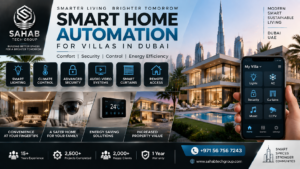
What Is Smart Home Automation?
At its core, smart home automation refers to connecting a villa’s electrical, lighting, security, and comfort systems to a centralized network, so they can be controlled remotely, scheduled automatically, or triggered by specific conditions — rather than operated manually, one switch at a time.
In practice, this typically includes:
- Smart lighting control
- Climate and AC automation
- Security and access control
- Smart irrigation
- Entertainment and audio-visual integration
- Energy monitoring
- Centralized control via app or voice assistant
Because these systems can be installed individually or as a fully integrated package, automation is highly scalable — villa owners can start small and expand over time, or commit to a complete setup from the outset.
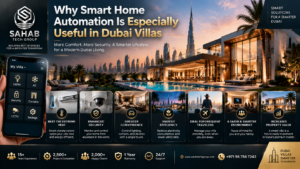
Why Smart Home Automation Is Especially Useful in Dubai Villas
Several factors make automation particularly valuable for villa living in Dubai specifically, beyond simple novelty or convenience.
Managing Energy Costs in a Hot Climate
Since air conditioning accounts for a large share of a villa’s electricity bill, automated climate control — adjusting temperature based on occupancy or time of day — can meaningfully reduce unnecessary cooling costs.
Enhanced Security for Larger Properties
Villas typically have more entry points, garden areas, and perimeter space than apartments, so smart cameras, sensors, and access control add a meaningful layer of security across a larger footprint.
Convenience for Multi-Zone Living
Because villas often span multiple floors and zones, centralized control makes it far easier to manage lighting, climate, and entertainment across the entire property from a single app, rather than moving room to room.
Remote Monitoring While Traveling
Additionally, many villa owners travel frequently. Smart systems allow them to check security cameras, monitor energy usage, or adjust settings remotely, offering peace of mind while away.
Integration with Solar and Sustainability Goals
Finally, as more villas adopt solar panels, smart energy monitoring systems help owners track production and consumption, making it easier to optimize usage and maximize savings.
Core Smart Home Systems for Villas
1. Smart Lighting
Smart lighting allows control over brightness, color temperature, and scheduling, either through an app, voice assistant, or wall-mounted smart switches. Common use cases include:
- Scheduled lighting for security while traveling
- Scene-based lighting for entertaining or relaxing
- Motion-triggered lighting for hallways and outdoor areas
- Dimming and mood lighting for living and dining spaces
2. Smart Climate Control
Smart thermostats and AC controllers allow temperature scheduling, zone-based control, and remote adjustment. As a result, cooling can be reduced automatically when rooms are unoccupied, then restored shortly before residents return.
3. Security & Access Control
This category typically includes smart cameras, video doorbells, smart locks, and alarm systems — often integrated so that a triggered sensor can send an alert directly to the homeowner’s phone.
4. Smart Irrigation
Given Dubai’s climate, garden irrigation is a significant water expense for many villas. Smart irrigation systems adjust watering schedules based on weather conditions and soil moisture, reducing both waste and manual effort.
5. Entertainment & Audio-Visual Integration
Multi-room audio, integrated home theater systems, and centralized AV control allow villa owners to manage entertainment systems across multiple zones from a single interface.
6. Energy Monitoring
Smart energy monitors track real-time electricity usage, helping owners identify which systems consume the most power and adjust habits or automation rules accordingly.
7. Centralized Control Hub
Finally, a centralized hub — whether app-based, a wall-mounted panel, or voice assistant integration — ties all of the above systems together into a single, unified control experience.
Comparing Smart Home System Categories
| System | Primary Benefit | Complexity to Install | Typical Priority |
|---|---|---|---|
| Smart Lighting | Convenience & security | Low–Medium | High |
| Climate Control | Energy savings | Medium | High |
| Security & Access | Safety & peace of mind | Medium–High | High |
| Smart Irrigation | Water savings | Low–Medium | Medium |
| AV Integration | Entertainment convenience | Medium–High | Medium |
| Energy Monitoring | Cost visibility & optimization | Low | Medium |
| Centralized Hub | Unified control | Medium | High |
For most villa owners, lighting, climate control, and security tend to offer the most noticeable day-to-day impact, which is why they’re often prioritized first in a phased automation plan.
Retrofitting vs New-Build Automation
One important consideration is whether automation is being added to an existing villa or planned during new construction or renovation.
| Factor | Retrofit (Existing Villa) | New-Build / Renovation |
|---|---|---|
| Wiring complexity | Higher — may require wireless solutions | Lower — wiring can be planned in advance |
| Installation disruption | Moderate to significant | Minimal, integrated into construction |
| System flexibility | Somewhat limited by existing infrastructure | Highly flexible |
| Cost efficiency | Generally higher per feature | Generally more cost-efficient overall |
| Recommended approach | Wireless/hybrid systems | Wired, fully integrated systems |
Because retrofitting an already-finished villa often requires additional wiring work, many owners opt for wireless or hybrid smart systems, which minimize disruption while still delivering strong functionality. Investing in smart automation for villas in Dubai enhances overall property value and energy efficiency.
What Affects the Cost of Smart Home Automation?
Naturally, automation costs vary considerably depending on the scope and sophistication of the system, which is why no single number applies to every villa.
- Villa size and number of rooms/zones
- Number of systems integrated (lighting only vs. full integration)
- Wired vs wireless installation
- Brand and equipment quality
- Level of customization and programming
- Retrofit vs new-build installation
- Integration with existing solar or energy systems
Because these factors interact, two villas of similar size can end up with quite different costs depending on how many systems are automated and how deeply they’re integrated.
Estimated Smart Home Automation Costs in Dubai (2026)
| System | Estimated Cost in Dubai (AED) |
|---|---|
| Smart lighting (per room) | 800 – 2,500 |
| Whole-villa smart lighting package | 15,000 – 40,000+ |
| Smart thermostat / AC controller (per zone) | 1,200 – 3,000 |
| Smart security camera (per unit) | 500 – 2,000 |
| Video doorbell | 800 – 2,000 |
| Smart lock | 1,000 – 3,000 |
| Smart irrigation system | 5,000 – 15,000+ |
| Multi-room audio setup | 10,000 – 30,000+ |
| Energy monitoring system | 2,000 – 6,000 |
| Full villa automation (integrated) | 60,000 – 250,000+ |
*These are indicative estimates only. Actual pricing depends on villa size, brand selection, wired vs wireless installation, and level of system integration. A professional site assessment is the most reliable way to obtain an accurate quotation.
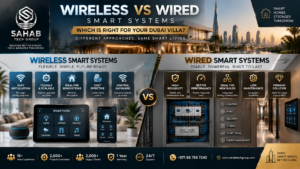
Wireless vs Wired Smart Systems
| Factor | Wireless Systems | Wired Systems |
|---|---|---|
| Installation disruption | Minimal | Higher, especially in existing villas |
| Reliability | Generally good, dependent on network | Very high, less prone to interference |
| Cost | Lower upfront | Higher upfront, more durable long-term |
| Best suited for | Retrofits | New builds & major renovations |
| Scalability | Easy to expand | Requires planning in advance |
In many cases, villa owners choose a hybrid approach — wired for core systems like lighting and climate control, and wireless for elements like cameras or sensors that are easier to add later.
Common Mistakes Villa Owners Make with Smart Home Automation
Trying to Automate Everything at Once
Attempting a full-scale rollout without a phased plan can quickly become overwhelming and expensive. Starting with high-impact systems — lighting, climate, and security — is usually more manageable.
Choosing Incompatible Systems
Similarly, buying devices from multiple brands without confirming compatibility can lead to a fragmented setup that doesn’t integrate smoothly under one app.
Ignoring Network Infrastructure
Since most smart systems rely on a stable network connection, weak Wi-Fi coverage across a large villa can significantly affect reliability if not addressed beforehand.
Overlooking Future Scalability
Additionally, installing a basic system without considering future expansion can make it harder to add new features later on.
Skipping Professional Installation
Finally, complex integrations, especially those involving climate control and security, generally benefit from professional installation to ensure reliable configuration.
A Practical Smart Home Automation Planning Checklist
- □ Identify priority systems (lighting, climate, security, irrigation)
- □ Decide between wired, wireless, or hybrid installation
- □ Confirm network coverage across the villa
- □ Choose compatible brands/ecosystem for centralized control
- □ Plan for future scalability before finalizing scope
- □ Get a detailed, itemized quotation before installation
- □ Schedule professional installation for complex systems
- □ Test integration across all systems before final handover
How Sahab Tech Group LLC Can Help
Given the range of systems involved, Sahab Tech Group LLC provides smart home automation services for villas across Dubai, covering design, installation, and integration under a single point of contact.
With 15+ years of industry experience, the team supports villa owners with:
- Smart lighting design and installation
- Climate control and AC automation
- Security cameras, video doorbells, and smart locks
- Smart irrigation system setup
- Multi-room audio and entertainment integration
- Energy monitoring solutions
- Full villa automation and centralized control setup
Why Choose Sahab Tech Group LLC for Smart Home Automation?
| What You Need | Sahab Tech Group LLC |
|---|---|
| Experienced installation team | 15+ years of industry experience |
| Villa-focused expertise | ✓ |
| Wired & wireless system support | ✓ |
| Security & access control integration | ✓ |
| Energy monitoring solutions | ✓ |
| Transparent, itemized quotations | ✓ |
| Dubai-wide service | ✓ |
Conclusion
Altogether, smart home automation has moved well beyond a luxury add-on — for many Dubai villa owners, it now plays a practical role in managing energy costs, enhancing security, and simplifying day-to-day living across larger, multi-zone properties.
Ultimately, choosing the right combination of systems depends on the villa’s size, whether it’s a retrofit or new build, and which features matter most — whether that’s energy savings through climate automation, added security through smart cameras and locks, or simply the convenience of centralized control.
So, if you’re considering smart home automation and want guidance on which systems to prioritize, along with realistic cost planning, professional support can make the entire process considerably smoother. Investing in smart automation for villas in Dubai enhances overall property value and energy efficiency.
Contact Sahab Tech Group LLC at +971 56 756 7243 to discuss your smart home automation project or request a professional quotation.

FAQs
1. How much does smart home automation cost for a villa in Dubai?
Generally, costs range from AED 15,000 for a basic lighting package to AED 250,000+ for a fully integrated whole-villa system, depending on scope and complexity.
2. Is it better to install wired or wireless smart systems?
It depends on the situation — wired systems generally suit new builds or major renovations, while wireless or hybrid systems are usually more practical for retrofitting an existing villa.
3. Can smart home automation actually reduce electricity bills?
Yes, particularly through automated climate control and energy monitoring, which help reduce unnecessary AC usage and highlight which systems consume the most power.
4. Do I need to automate my entire villa at once?
Not at all. Most owners start with high-impact systems like lighting, climate control, and security, then expand the setup in phases over time.
5. What’s the most common mistake when planning smart home automation?
Most commonly, attempting to automate everything at once without a phased plan, or choosing incompatible devices that don’t integrate smoothly under one control system.