
Bathroom Plumbing Problems Every Dubai Homeowner Should Know
Dealing with unexpected bathroom plumbing problems can cause major inconvenience in any home. Knowing how to troubleshoot leaks efficiently ensures compliance with Dubai Municipality standards.
In Dubai specifically, hard water, high usage, and the pressure demands of multi-story buildings add extra strain on bathroom plumbing systems compared to many other regions. As a result, certain problems tend to show up more frequently here than elsewhere.
This guide walks through the most common bathroom plumbing problems Dubai homeowners encounter, what typically causes them, warning signs to watch for, and realistic 2026 repair cost estimates.

Why Bathroom Plumbing Issues Are Common in Dubai
Hard Water Mineral Buildup
Dubai’s water supply carries a notable mineral content, and over time, this contributes to limescale buildup inside pipes, faucets, and shower heads, gradually reducing water flow and fixture performance.
High-Rise Water Pressure Variations
In apartment buildings, water pressure can vary significantly between floors, occasionally straining fixtures and valves not properly rated for the pressure they receive.
Frequent Bathroom Usage
Given typical household size and usage patterns, bathroom fixtures in Dubai homes often see heavier daily use than fixtures in smaller households elsewhere, accelerating wear over time.
Aging Building Infrastructure
In older buildings, original plumbing materials and fittings may not hold up as well as modern equivalents, making leaks and corrosion more likely as systems age.
Apartment vs Villa Bathroom Plumbing: Key Differences
Because apartments and villas have fundamentally different plumbing setups, the problems homeowners typically encounter — and how they’re diagnosed — often differ as well.
| Factor | Apartment Bathrooms | Villa Bathrooms |
|---|---|---|
| Water pressure source | Shared building system, varies by floor | Typically more consistent, property-specific |
| Pipe accessibility | Often shared walls/risers, harder to access | Generally more accessible for repairs |
| Common issues | Pressure inconsistency, shared drain blockages | Water heater issues, individual leak sources |
| Responsibility for repairs | Sometimes shared with building management | Fully owner-managed |
| Leak detection complexity | Can involve neighboring units | Usually isolated to the property |
In apartment buildings, a plumbing issue on one floor can sometimes originate from a shared riser or a neighboring unit, which makes accurate diagnosis particularly important before starting repairs. Villa owners, by comparison, generally deal with more isolated systems, though water heater and pressure tank issues tend to be more common given the larger property size and independent water supply setup.
Common Bathroom Plumbing Problems
1. Leaking Faucets and Fixtures
A dripping faucet might seem minor, but left unaddressed, it wastes a surprising amount of water and money over time, often the result of a worn washer, O-ring, or valve seat.
2. Clogged Drains
Hair, soap residue, and mineral deposits gradually build up inside drain pipes, slowing water flow until a full blockage eventually develops.
3. Low Water Pressure
Weak water pressure at bathroom fixtures often traces back to limescale buildup inside pipes or fixtures, though it can also indicate a leak elsewhere in the system reducing overall pressure.
4. Running or Leaking Toilets
A toilet that continues running after flushing, or one that leaks at its base, typically points to a worn flapper valve, faulty fill valve, or a failing wax ring seal.
5. Hidden Pipe Leaks
Perhaps the most concerning issue on this list, hidden leaks inside walls or beneath floors can cause significant water damage long before any visible sign appears on the surface.
6. Water Heater Issues
Sediment buildup, failing heating elements, or valve problems can all affect a water heater’s performance, leading to inconsistent temperatures or reduced hot water availability.
7. Poor Drainage or Standing Water
Water pooling on the bathroom floor after a shower often indicates a drainage slope issue or a partially blocked floor drain that needs clearing.
8. Corroded or Failing Pipes
Older galvanized pipes are particularly prone to internal corrosion over time, which can reduce water quality, restrict flow, and eventually lead to leaks at weak points.
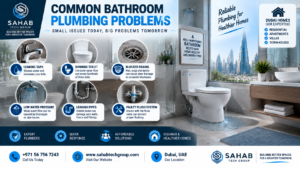
Comparing Common Bathroom Plumbing Problems
| Problem | Typical Cause | Urgency Level | DIY-Friendly? |
|---|---|---|---|
| Leaking faucet | Worn washer/O-ring | Low–Moderate | Often yes |
| Clogged drain | Hair, soap, mineral buildup | Low–Moderate | Sometimes |
| Low water pressure | Limescale buildup, hidden leak | Moderate | Rarely |
| Running/leaking toilet | Worn valve or seal | Moderate | Sometimes |
| Hidden pipe leak | Corrosion, pressure damage | High | No |
| Water heater issues | Sediment, failing components | Moderate–High | No |
| Poor drainage/standing water | Slope or blockage issue | Moderate | Rarely |
| Corroded pipes | Age, water quality, material | High | No |
Warning Signs of a Hidden Plumbing Problem
Some of the most serious bathroom plumbing issues don’t announce themselves clearly. These signs deserve prompt investigation, since catching a hidden leak early can prevent extensive structural damage:
- Unexplained increase in water bills
- Musty odor without visible mold
- Discoloration or staining on walls or ceilings near the bathroom
- A hissing or dripping sound inside walls
- Soft or warped flooring near the bathroom
- Consistently low water pressure with no obvious cause
If any of these signs appear, scheduling a professional leak detection service is far safer than waiting for visible damage to confirm the problem.
What Affects the Cost of Bathroom Plumbing Repairs?
Several factors influence repair costs, which is why quotations for seemingly similar issues can vary considerably.
- Type and severity of the problem — a simple faucet repair versus a hidden pipe leak
- Accessibility — pipes behind tiled walls cost more to access than exposed fittings
- Age and condition of existing plumbing
- Whether tile or wall repair is needed after accessing pipework
- Fixture quality — replacement parts range from standard to premium
- Water heater type and capacity, if involved in the repair
Because these variables interact, two bathrooms with similar symptoms can end up with very different repair costs depending on what’s actually causing the problem.
Estimated Bathroom Plumbing Repair Costs in Dubai (2026)
| Service | Estimated Cost in Dubai (AED) |
|---|---|
| Faucet repair/replacement | 150 – 500 |
| Drain unclogging | 150 – 400 |
| Toilet repair (flapper/fill valve) | 150 – 450 |
| Toilet replacement | 800 – 2,500+ |
| Low water pressure diagnosis & fix | 250 – 800+ |
| Leak detection service | 300 – 900 |
| Hidden pipe leak repair | 600 – 3,000+ |
| Water heater repair | 300 – 1,200+ |
| Water heater replacement | 1,200 – 4,000+ |
| Full bathroom pipe repiping | Highly dependent on scope |
*These are indicative estimates only. Actual pricing depends on the issue’s severity, accessibility, and property-specific conditions. A professional inspection remains the most reliable way to obtain an accurate quotation.
DIY Fixes vs When to Call a Professional
| Situation | DIY-Appropriate? | Recommended Approach |
|---|---|---|
| Minor faucet drip | Often yes | Replace washer/O-ring |
| Simple drain clog | Sometimes | Plunger or drain snake |
| Running toilet | Sometimes | Check/replace flapper valve |
| Low water pressure | Rarely | Professional diagnosis |
| Any suspected hidden leak | No | Professional leak detection |
| Water heater malfunction | No | Professional repair |
| Persistent or recurring issues | No | Professional inspection |
As a general rule, simple, visible fixture issues are reasonable to attempt independently, while anything involving hidden pipework, water heaters, or recurring problems is best left to a professional.

Preventing Bathroom Plumbing Problems Before They Start
Address Small Leaks Immediately
A minor drip today often becomes a bigger repair tomorrow, so fixing small leaks as soon as they’re noticed prevents unnecessary escalation.
Clean Drains Regularly
Using a drain strainer to catch hair and debris, combined with periodic cleaning, helps prevent the gradual buildup that leads to clogs.
Schedule Periodic Water Heater Maintenance
Flushing sediment from a water heater periodically extends its lifespan considerably and helps maintain consistent hot water performance.
Monitor Water Bills for Unexplained Increases
A sudden, unexplained rise in water usage often signals a hidden leak, making bill monitoring a simple but effective early warning tool.
Consider Periodic Professional Inspections
Particularly in older properties, periodic plumbing inspections can catch developing issues — corrosion, worn valves, or minor leaks — before they escalate into major repairs.
A Practical Checklist for Bathroom Plumbing Maintenance
- □ Check faucets and showerheads for drips or leaks
- □ Clean drains regularly to prevent buildup
- □ Test toilet function for running water or leaks at the base
- □ Monitor water pressure for any noticeable changes
- □ Watch for unexplained increases in water bills
- □ Schedule water heater maintenance periodically
- □ Investigate musty odors or wall staining promptly
- □ Consider a professional inspection for older properties
How Sahab Tech Group LLC Can Help
Given how much hidden plumbing issues can escalate if left unaddressed, Sahab Tech Group LLC provides bathroom plumbing repair and maintenance services for villas, apartments, and commercial properties across Dubai.
With 15+ years of industry experience, the team supports property owners with:
- Faucet, toilet, and fixture repair
- Drain cleaning and unclogging
- Leak detection and hidden pipe repair
- Water heater repair and replacement
- Low water pressure diagnosis
- Full bathroom repiping where needed
Why Choose Sahab Tech Group LLC for Bathroom Plumbing?
| What You Need | Sahab Tech Group LLC |
|---|---|
| Experienced plumbing technicians | 15+ years of industry experience |
| Leak detection expertise | ✓ |
| Residential & commercial coverage | ✓ |
| Emergency response support | ✓ |
| Transparent, itemized quotations | ✓ |
| Dubai-wide service | ✓ |
Conclusion
Bathroom plumbing problems range from a simple, inexpensive faucet drip to a hidden pipe leak capable of causing significant structural damage over time. Knowing what to watch for — unexplained water bill increases, musty odors, staining, or persistent low pressure — makes it far easier to catch problems early, before they become costly emergencies.
Understanding common causes, realistic repair costs, and which issues are safe to handle independently versus which require professional attention helps homeowners respond appropriately rather than either overreacting to minor issues or ignoring genuine warning signs.
If you’re dealing with a bathroom plumbing issue and aren’t sure how serious it is, a professional inspection can provide clarity before the problem grows into something more expensive.
Contact Sahab Tech Group LLC at +971 56 756 7243 to schedule a plumbing inspection or repair.

FAQs
1. Why does Dubai’s water cause more plumbing issues than other regions?
Mainly due to hard water mineral content, which contributes to limescale buildup inside pipes and fixtures over time, gradually reducing flow and performance.
2. How can I tell if I have a hidden pipe leak?
Common signs include unexplained increases in water bills, musty odors, wall or ceiling staining, and consistently low water pressure without an obvious cause.
3. Is a dripping faucet really worth fixing right away?
Yes — a minor drip wastes a surprising amount of water and money over time, and it’s usually an inexpensive, quick fix compared to letting it continue.
4. Can I unclog a bathroom drain myself?
Often, yes, for minor clogs caused by hair or soap buildup. However, recurring or severe blockages may indicate a deeper issue that needs professional attention.
5. How often should a water heater be serviced?
Generally, once or twice a year, since periodic sediment flushing helps maintain performance and extends the unit’s overall lifespan.