
How to Fix Peeling Paint in Dubai Homes
Dealing with wall damage due to climate can be frustrating. Learning how to fix peeling paint in dubai helps keep your interiors fresh and complies with Dubai Municipality maintenance standards.
However, simply scraping off the loose paint and applying a fresh coat often provides only a temporary fix. Without addressing what caused the paint to fail in the first place, the same peeling tends to return within months, wasting both time and money.
With that in mind, this guide explains what typically causes peeling paint in Dubai homes, the correct step-by-step process for fixing it properly, and realistic 2026 cost estimates for interior and exterior repairs.

Why Paint Peels in Dubai’s Climate
Moisture Trapped Beneath the Surface
When moisture becomes trapped between the wall and the paint film, it eventually pushes the paint away from the surface, causing bubbling and peeling. This is one of the most common causes of interior peeling, particularly in bathrooms and kitchens.
Poor Surface Preparation
Similarly, paint applied over dust, grease, or a previous flaking coat struggles to adhere properly from the outset, making early peeling almost inevitable regardless of paint quality.
Extreme Heat and UV Exposure
Meanwhile, exterior walls exposed to Dubai’s intense sun and heat cycles experience repeated expansion and contraction, which gradually weakens paint adhesion over time, especially with lower-quality products.
Using the Wrong Paint Type
In addition, interior paint applied outdoors, or paint not formulated for high-heat climates, typically fails faster than products specifically designed to withstand these conditions.
Old, Deteriorating Paint Layers
Over time, in older properties, multiple layers of paint applied over the years can eventually lose their bond to the surface beneath, causing the entire buildup to peel away together.
Water Damage from Leaks
Finally, hidden plumbing leaks or roof seepage can introduce moisture directly behind painted surfaces, and until the actual leak gets repaired, no amount of repainting will resolve the peeling.

Interior vs Exterior Peeling: Different Causes, Different Fixes
| Factor | Interior Peeling | Exterior Peeling |
|---|---|---|
| Most common cause | Trapped moisture, humidity, leaks | UV exposure, heat cycles, poor-quality paint |
| Typical locations | Bathrooms, kitchens, ceilings | Sun-facing walls, parapets, window frames |
| Root cause to check first | Ventilation, leaks, condensation | Paint type, surface prep, sun exposure |
| Recommended paint type | Moisture-resistant, washable finish | Elastomeric or heat-reflective exterior paint |
Because interior and exterior peeling usually stem from different root causes, treating them with the same approach rarely produces lasting results.
Step-by-Step Process to Fix Peeling Paint
Step 1: Identify the Root Cause
To begin with, before any scraping or repainting begins, the underlying cause needs confirmation — whether that’s trapped moisture, poor surface prep, sun exposure, or a hidden leak. Skipping this step is the single biggest reason peeling paint returns after repair.
Step 2: Resolve the Underlying Issue
Next, if moisture or a leak is involved, that problem needs fixing first — repairing plumbing, improving ventilation, or addressing waterproofing — since paint cannot fix a moisture problem on its own.
Step 3: Remove All Loose and Peeling Paint
Once the root cause is under control, all flaking paint should be removed with a scraper or wire brush, down to a stable surface. Leaving any loose paint behind undermines adhesion for the new coat, regardless of how well the rest of the preparation goes.
Step 4: Sand the Surface Smooth
After that, sanding creates an even surface and helps the edges of remaining paint blend smoothly, reducing visible ridges once the new coat is applied.
Step 5: Clean and Dry the Surface Thoroughly
Subsequently, dust, grease, and residue should be cleaned off completely, and the surface must be fully dry before moving forward — painting over a damp or dusty surface compromises adhesion from the start.
Step 6: Apply a Suitable Primer
From there, a quality primer, chosen for either interior moisture resistance or exterior UV protection depending on the location, creates a stable base and significantly improves how well the topcoat bonds.
Step 7: Apply the Correct Paint Type
Finally, applying a paint genuinely suited to the surface — heat-resistant for exteriors, washable or mold-resistant for interiors — provides the best chance of a long-lasting result.
Altogether, following each of these steps in order, rather than jumping straight to repainting, is what separates a lasting fix from a repeat problem within months.

How to Tell Peeling From Other Paint Problems
Peeling isn’t the only way paint can fail, and mistaking one issue for another often leads to the wrong repair approach entirely.
Peeling vs Cracking
Specifically, peeling involves paint lifting away from the surface in flakes or sheets, whereas cracking shows up as fine lines within the paint film itself, usually caused by aging or excessive coat thickness rather than adhesion failure.
Peeling vs Bubbling
Similarly, bubbling appears as raised, unbroken pockets in the paint, often the earlier stage of what eventually becomes peeling once the bubble breaks open and the paint flakes away.
Peeling vs Chalking
By contrast, chalking produces a powdery residue on the surface, typically from UV degradation, rather than paint physically lifting or flaking off the wall.
Ultimately, correctly identifying which issue is actually present helps determine whether the fix involves addressing moisture, improving surface preparation, or simply switching to a higher-quality, climate-suited paint.
Signs the Underlying Cause Hasn’t Been Fixed
Even after repainting, certain signs suggest the root cause may still be present:
- New peeling appearing in the same spot within a few months
- A musty smell returning near the affected area
- Bubbling reappearing shortly after the new coat dries
- Discoloration bleeding through the fresh paint
- Soft or damp-feeling wall surface beneath the paint
Should any of these signs appear, further investigation into moisture sources or surface preparation is needed before attempting another repaint. If you want to know how to fix peeling paint in dubai, make sure to scrape off loose flakes before priming.
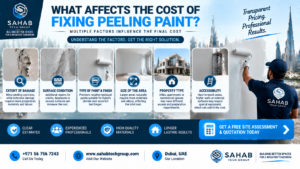
What Affects the Cost of Fixing Peeling Paint?
Naturally, several factors influence repair costs, which explains why quotations can vary significantly between projects that look similar on the surface.
- Extent of peeling — a small patch versus widespread coverage
- Root cause complexity — simple surface prep versus a hidden leak requiring repair
- Interior vs exterior location — exterior work often involves access equipment
- Paint quality selected — standard versus premium heat- or moisture-resistant products
- Surface condition — how many layers need removal before repainting
- Number of coats required for proper coverage and durability
Because these variables interact, two properties with visually similar peeling can end up with quite different repair costs depending on what’s actually causing the problem.
Estimated Peeling Paint Repair Costs in Dubai (2026)
| Service | Estimated Cost in Dubai (AED) |
|---|---|
| Minor interior touch-up (small area) | 200 – 500 |
| Full room interior repaint (with prep) | 1,200 – 3,000+ |
| Exterior wall scraping & repaint (per sq. ft.) | 8 – 15 |
| Full villa exterior repaint | 8,000 – 20,000+ |
| Leak repair (if root cause) | 500 – 2,500+ |
| Waterproofing (if root cause, per sq. ft.) | 15 – 35 |
| Primer application (per sq. ft.) | 2 – 5 |
*These are indicative estimates only. Actual pricing depends on the extent of peeling, root cause, and site-specific conditions. A professional inspection remains the most reliable way to obtain an accurate quotation. If you want to know how to fix peeling paint in dubai, make sure to scrape off loose flakes before priming.
DIY Touch-Up vs Professional Repair
| Situation | DIY-Appropriate? | Recommended Approach |
|---|---|---|
| Small interior patch, no moisture issue | Often yes | Scrape, sand, prime, repaint |
| Peeling near a suspected leak | No | Professional leak diagnosis first |
| Large exterior peeling areas | Rarely | Professional access equipment & prep needed |
| Recurring peeling in the same spot | No | Root cause investigation required |
| Multiple paint layers failing together | Rarely | Professional surface assessment |
As a general rule, small, isolated peeling with no obvious moisture involvement is reasonable to handle independently, while recurring or extensive peeling usually benefits from a professional diagnosis first. If you want to know how to fix peeling paint in dubai, make sure to scrape off loose flakes before priming.
Preventing Peeling Paint From Happening Again
Address Moisture Sources Promptly
To start, investigating any dampness, leaks, or ventilation issues as soon as they’re noticed prevents the conditions that lead to future peeling.
Choose Climate-Appropriate Paint
Likewise, selecting heat-resistant paint for exteriors and moisture-resistant paint for wet interior areas significantly reduces the likelihood of premature peeling.
Ensure Proper Surface Preparation Every Time
At the same time, skipping preparation steps to save time during a repaint often costs more later, since inadequate prep is one of the leading causes of early paint failure.
Improve Ventilation in Wet Areas
Additionally, running exhaust fans in bathrooms and kitchens helps moisture escape rather than settle on painted surfaces over time.
Schedule Periodic Inspections
Finally, particularly for exterior walls, periodic inspections can catch early signs of paint failure before they develop into widespread peeling.
A Practical Checklist Before Fixing Peeling Paint
- □ Identify whether the cause is moisture-related, heat-related, or preparation-related
- □ Resolve any underlying leak or ventilation issue first
- □ Remove all loose and flaking paint completely
- □ Sand the surface smooth before priming
- □ Clean and fully dry the surface
- □ Apply a suitable primer for the location
- □ Choose the correct paint type (interior vs exterior formulation)
- □ Monitor the area after repainting for any recurring signs
How Sahab Tech Group LLC Can Help
Given how often peeling paint gets treated as a cosmetic issue rather than a symptom, Sahab Tech Group LLC provides paint diagnosis, moisture treatment, and repainting services for villas, apartments, and commercial properties across Dubai.
With 15+ years of industry experience, the team supports property owners with:
- Root-cause diagnosis for peeling and bubbling paint
- Leak detection and repair where moisture is involved
- Proper surface preparation and priming
- Interior and exterior repainting with climate-suited products
- Waterproofing services for recurring exterior issues

Why Choose Sahab Tech Group LLC for Peeling Paint Repair?
| What You Need | Sahab Tech Group LLC |
|---|---|
| Experienced painting team | 15+ years of industry experience |
| Root-cause diagnosis, not just surface fixes | ✓ |
| Interior & exterior expertise | ✓ |
| Proper surface preparation | ✓ |
| Transparent, itemized quotations | ✓ |
| Dubai-wide service | ✓ |
Conclusion
Altogether, peeling paint is rarely just about appearance — it usually points to an underlying issue, whether that’s trapped moisture, poor surface preparation, or the wrong paint type for the conditions. Fixing it properly means identifying and resolving that root cause first, then following a careful preparation and painting process rather than simply applying a fresh coat over the problem.
Ultimately, understanding this process, along with realistic cost expectations, helps homeowners avoid the frustrating cycle of repeated repainting that comes from treating symptoms instead of causes.
So, if you’re dealing with peeling paint and want a proper diagnosis before repainting, professional support can help ensure the fix actually lasts.
Contact Sahab Tech Group LLC at +971 56 756 7243 to discuss paint repair or request a professional quotation.
FAQs
1. Why does paint peel so often in Dubai homes?
Mainly due to intense heat and UV exposure outdoors, and trapped moisture or poor ventilation indoors — both of which weaken paint adhesion over time.
2. Can I just repaint over peeling paint without fixing the cause?
Repainting without addressing the root cause typically leads to the same peeling reappearing within months, since paint alone cannot resolve an underlying moisture or preparation issue.
3. How do I know if peeling paint is caused by a leak?
Signs like a musty smell, soft or damp wall surfaces, or discoloration bleeding through fresh paint often indicate an active moisture source rather than simple wear.
4. Is exterior peeling more serious than interior peeling?
Not necessarily more serious, but exterior peeling often involves different causes — mainly heat and UV exposure — and may require access equipment for proper repair.
5. How long should a wall dry before repainting after fixing a leak?
The surface should be completely dry before priming and painting, since residual moisture trapped beneath a new coat almost guarantees the peeling will return.