
Building Waterproofing Why Every Property Needs It
Investing in professional building waterproofing solutions is essential because water is one of the most essential resources in any building, yet it can also become one of the most destructive when it enters places it shouldn’t. Whether it’s a residential villa, an apartment, an office, a warehouse, or a commercial building, uncontrolled moisture can gradually weaken structural components, damage interior finishes, encourage mould growth, and lead to expensive repairs. Investing in modern building waterproofing solutions protects your property from heavy rain damage.
This is where Building Waterproofing becomes essential.
Building waterproofing is the process of protecting a property’s structural elements from water penetration by applying specialized waterproofing systems and materials. These protective layers create a barrier that prevents moisture from entering roofs, walls, basements, bathrooms, balconies, foundations, terraces, and other vulnerable areas. Investing in modern building waterproofing solutions protects your property from heavy rain damage.
However, waterproofing is not just about stopping leaks after they appear. A professionally designed waterproofing system helps prevent water damage before it starts, extending the life of the building while reducing maintenance costs over the long term.
Importance’s of waterproofing:
In Dubai, waterproofing is even more important because buildings are exposed to extreme temperatures, occasional heavy rainfall, high humidity, and continuous air-conditioning condensation. Over time, these conditions can cause waterproofing layers to deteriorate, allowing water to seep into the building structure if they are not properly maintained. Investing in modern building waterproofing solutions protects your property from heavy rain damage.
Whether you are constructing a new property or maintaining an existing one, investing in professional Waterproofing Services Dubai is one of the smartest ways to protect your investment.
In this complete guide, you’ll learn everything you need to know about building waterproofing, including the different waterproofing systems, areas that require protection, warning signs of water damage, estimated costs, maintenance tips, and how to choose the right Waterproofing Contractors Dubai.
At Sahab Tech Group LLC, we provide complete Building Waterproofing Solutions for residential, commercial, and industrial properties across Dubai. Backed by 15+ years of industry experience, our skilled specialists use high-quality materials and proven application methods to help property owners prevent leaks, protect structural integrity, and extend the lifespan of their buildings. Investing in modern building waterproofing solutions protects your property from heavy rain damage.
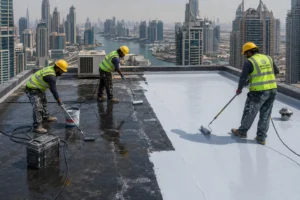
What Is Building Waterproofing?
Simply put, Building Waterproofing is the process of preventing water from penetrating a building’s structure by applying protective materials, membranes, coatings, and sealing systems to areas that are exposed to moisture. Investing in modern building waterproofing solutions protects your property from heavy rain damage.
Without effective waterproofing, water can gradually penetrate concrete, brickwork, plaster, and masonry. As moisture accumulates, it can lead to:
- Cracked walls
- Damp ceilings
- Peeling paint
- Mould and mildew growth
- Concrete deterioration
- Steel reinforcement corrosion
- Floor damage
- Structural weakening
Fortunately, professional waterproofing systems are designed to stop these problems before they become serious.
Modern waterproofing solutions are suitable for almost every type of property, including:
- Villas
- Apartments
- Townhouses
- Office buildings
- Retail stores
- Hotels
- Restaurants
- Warehouses
- Factories
- Healthcare facilities
- Educational institutions
Depending on the project, waterproofing may be applied during new construction or as part of a renovation or maintenance project. In both cases, the objective remains the same: protect the building from water intrusion and preserve its long-term performance. Investing in modern building waterproofing solutions protects your property from heavy rain damage.
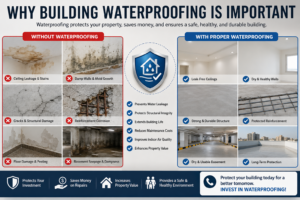
Why Building Waterproofing Is Important
Many property owners assume waterproofing is only necessary after a leak appears. In reality, preventive waterproofing is far more effective and cost-efficient than repairing water damage after it has already occurred.
Water infiltration rarely remains isolated. Instead, it spreads through walls, ceilings, floors, and structural elements, affecting multiple parts of the building over time. Consequently, delaying waterproofing often leads to higher repair costs and unnecessary disruption.
Below are some of the key reasons why Building Waterproofing is an essential investment. Investing in modern building waterproofing solutions protects your property from heavy rain damage.
1. Protects Structural Integrity
Water can gradually weaken concrete, mortar, and steel reinforcement by penetrating small cracks and porous surfaces. Investing in modern building waterproofing solutions protects your property from heavy rain damage.
Over time, this may result in:
- Concrete cracking
- Reinforcement corrosion
- Structural movement
- Reduced load-bearing capacity
- Premature building deterioration
Professional Concrete Waterproofing helps preserve the strength and durability of these critical structural components.
2. Prevents Costly Water Damage
Repairing water-damaged walls, ceilings, flooring, electrical systems, or furniture is often significantly more expensive than installing a waterproofing system.
By preventing leaks before they develop, property owners can avoid:
- Interior repairs
- Ceiling replacement
- Flooring replacement
- Paint restoration
- Electrical damage
- Furniture damage
As a result, preventive waterproofing often delivers excellent long-term value. Investing in modern building waterproofing solutions protects your property from heavy rain damage.
3. Reduces Mould and Mildew Growth
Persistent moisture creates the ideal environment for mould and mildew.
Besides affecting the appearance of a property, mould can also:
- Produce unpleasant odours
- Damage interior finishes
- Reduce indoor air quality
- Increase maintenance requirements
Keeping moisture out helps maintain a healthier and more comfortable indoor environment.
4. Extends Building Lifespan
Every building naturally ages. However, uncontrolled moisture accelerates this process considerably.
Proper waterproofing protects:
- Foundations
- Concrete structures
- Masonry walls
- Roof systems
- Exterior facades
- Balconies
- Bathrooms
- Basements
Consequently, buildings remain structurally sound for much longer with fewer major repairs.
5. Improves Property Value
Buyers, tenants, and investors generally prefer buildings that have been properly maintained.
A well-protected property offers:
- Better resale value
- Improved market appeal
- Lower maintenance concerns
- Greater buyer confidence
Preventive maintenance, including waterproofing, demonstrates that a property has been responsibly cared for.
6. Supports Other Renovation Projects
Waterproofing is often completed before carrying out:
- Bathroom Renovation
- Kitchen Renovation
- Tile Installation
- Flooring Installation
- Interior Design upgrades
- Civil Work Services
Without proper waterproofing, newly installed finishes may become damaged by hidden moisture problems.
Benefits of Building Waterproofing
| Benefit | Why It Matters |
|---|---|
| Prevents Water Leakage | Protects walls, ceilings, and floors from moisture damage |
| Protects Structural Integrity | Reduces deterioration of concrete and reinforcement |
| Extends Building Lifespan | Helps preserve the property’s structural condition |
| Reduces Maintenance Costs | Prevents expensive repairs caused by water damage |
| Improves Indoor Comfort | Reduces dampness and moisture-related problems |
| Helps Prevent Mould Growth | Supports a healthier indoor environment |
| Enhances Property Value | Makes the property more attractive to buyers and tenants |
| Supports Renovation Projects | Provides a durable foundation for interior upgrades |
Areas That Require Waterproofing
Although every building is different, certain areas are consistently more vulnerable to water penetration than others. Protecting these locations helps reduce the likelihood of leaks and long-term structural damage.
Roof Waterproofing
The roof is one of the most exposed parts of any building.
It experiences:
- Direct sunlight
- Rainfall
- Temperature fluctuations
- Dust accumulation
- Standing water in some cases
Without proper Roof Waterproofing, moisture can gradually seep into ceilings and walls, leading to interior damage.
Professional roof waterproofing helps:
- Prevent leaks
- Protect concrete slabs
- Extend roof lifespan
- Reduce maintenance costs
Terrace Waterproofing
Terraces are continuously exposed to weather conditions and often experience water pooling after rainfall or cleaning.
Effective Terrace Waterproofing protects:
- Surface finishes
- Structural slabs
- Lower floors
- Interior ceilings
It also minimizes the risk of cracks caused by repeated moisture exposure.
Bathroom Waterproofing
Bathrooms remain one of the most common sources of hidden water damage due to frequent water usage.
Professional Bathroom Waterproofing is essential before installing:
- Floor tiles
- Wall tiles
- Showers
- Bathtubs
- Wash basins
Proper waterproofing prevents moisture from reaching adjacent rooms and structural components.
Basement Waterproofing
Basements are particularly vulnerable because they are located below ground level.
Without effective Basement Waterproofing, buildings may experience:
- Damp walls
- Water seepage
- Concrete deterioration
- Mould growth
- Foundation damage
High-quality waterproofing systems help keep underground spaces dry and functional.
Balcony Waterproofing
Balconies receive constant exposure to:
- Rain
- Humidity
- Cleaning water
- Temperature changes
Waterproofing prevents water from penetrating slabs and damaging interior rooms below.
Foundation Waterproofing
The foundation supports the entire building.
If moisture reaches foundation elements over an extended period, it can weaken structural stability and increase repair costs.
Professional foundation waterproofing helps protect one of the property’s most important structural components.
Exterior Wall Waterproofing
Exterior walls are continuously exposed to harsh environmental conditions.
Protective waterproof coatings help prevent:
- Rainwater penetration
- Surface cracks
- Paint deterioration
- Moisture intrusion
They also improve the durability and appearance of the building façade.
Water Tank Waterproofing
Water storage tanks require specialized waterproofing to maintain water quality while preventing leakage.
Proper waterproofing helps:
- Prevent water loss
- Protect concrete surfaces
- Reduce future maintenance requirements
Common Areas That Need Waterproofing
| Building Area | Primary Purpose |
| Roof | Protects against rainfall and surface water |
| Terrace | Prevents water penetration through slabs |
| Bathroom | Stops leaks beneath tiles and fixtures |
| Basement | Protects below-ground structures |
| Balcony | Prevents slab and ceiling leakage |
| Foundation | Preserves structural stability |
| Exterior Walls | Reduces moisture penetration |
| Water Tanks | Prevents leakage and concrete deterioration |
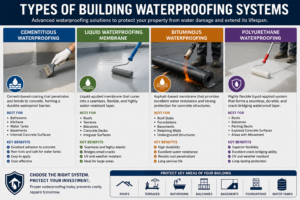
Types of Building Waterproofing Systems
Selecting the right waterproofing system depends on the building’s design, exposure to moisture, and intended use. Modern construction uses several waterproofing methods, each offering unique advantages for specific applications. Investing in modern building waterproofing solutions protects your property from heavy rain damage.
Cementitious Waterproofing
Cementitious waterproofing is one of the most widely used systems for residential and commercial buildings because it is durable, easy to apply, and highly effective in wet areas.
It is commonly used for:
- Bathrooms
- Kitchens
- Water tanks
- Basements
- Internal concrete surfaces
Its excellent adhesion to concrete makes it a reliable choice for many waterproofing projects.
Liquid Waterproofing Membrane
Liquid waterproofing involves applying a seamless liquid coating that cures into a flexible, protective membrane.
This system is ideal for:
- Roofs
- Terraces
- Balconies
- Concrete decks
- Irregular surfaces
Its flexibility allows it to bridge small surface cracks while providing continuous water protection.
Bituminous Waterproofing
Bituminous waterproofing uses asphalt-based membranes that offer excellent resistance to water penetration.
It is frequently selected for:
- Roof slabs
- Foundations
- Basements
- Retaining walls
- Underground structures
Because of its durability, bituminous waterproofing is commonly used in both residential and commercial construction.
Polyurethane Waterproofing
Polyurethane waterproofing creates a highly flexible and durable waterproof layer capable of withstanding movement and weather exposure.
It is particularly suitable for:
- Roofs
- Balconies
- Parking decks
- Exposed concrete surfaces
Its superior elasticity makes it an excellent solution for areas subject to thermal expansion and contraction.
Common Causes of Water Leakage
Even the strongest buildings can develop water leakage problems if waterproofing systems are damaged, improperly installed, or simply reach the end of their lifespan. While some leaks are immediately noticeable, others remain hidden for months, silently damaging walls, ceilings, concrete, and structural components.
Fortunately, understanding the most common causes of water intrusion allows property owners to take preventive action before minor issues become costly repairs. Investing in modern building waterproofing solutions protects your property from heavy rain damage.
1. Aging Waterproofing Systems
No waterproofing system lasts forever. Over time, continuous exposure to heat, UV rays, humidity, rain, and temperature changes causes waterproof membranes and protective coatings to deteriorate.
As they age, these systems may:
- Develop cracks
- Lose flexibility
- Separate from concrete surfaces
- Allow moisture penetration
Therefore, periodic inspections and timely maintenance are essential for preserving long-term protection.
2. Poor Installation
Even premium waterproofing materials cannot perform effectively if they are installed incorrectly.
Common installation mistakes include:
- Uneven membrane application
- Poor surface preparation
- Incorrect joint sealing
- Inadequate curing time
- Insufficient coating thickness
This is why hiring experienced Waterproofing Contractors Dubai is critical for achieving reliable and durable results.
3. Structural Cracks
Buildings naturally expand and contract due to temperature changes and structural movement.
Over time, this may create:
- Wall cracks
- Roof cracks
- Floor cracks
- Foundation cracks
These openings allow water to penetrate the structure, particularly during rainfall or cleaning.
Professional Concrete Waterproofing and crack repair help seal these vulnerable areas before significant damage occurs.
4. Damaged Roof Systems
Roofs are continuously exposed to harsh environmental conditions.
Common roof-related problems include:
- Cracked waterproof membranes
- Blocked drainage outlets
- Ponding water
- Damaged expansion joints
- Worn protective coatings
Without timely maintenance, these issues often result in ceiling leaks and interior water damage.
5. Plumbing Leaks
Not all water damage originates from outside the building.
Hidden plumbing leaks behind walls, beneath floors, or inside ceilings can slowly introduce moisture into the structure.
If left unresolved, they may cause:
- Damp walls
- Peeling paint
- Tile damage
- Mould growth
- Ceiling stains
Regular plumbing inspections complement waterproofing by addressing internal sources of moisture.
6. Poor Drainage Systems
Water should always be directed away from the building.
However, blocked or poorly designed drainage systems often allow water to accumulate around:
- Foundations
- Roofs
- Balconies
- Terraces
- Parking areas
Standing water significantly increases the risk of waterproofing failure.
7. Low-Quality Construction Materials
Using inexpensive or substandard materials may reduce initial construction costs, but it often leads to premature waterproofing failures.
High-quality waterproofing membranes, sealants, and coatings generally provide:
- Better durability
- Stronger adhesion
- Greater flexibility
- Longer service life
Investing in quality materials reduces maintenance expenses over time.
Major Causes of Water Leakage
| Cause | Potential Impact |
|---|---|
| Aging Waterproofing | Water penetration and membrane failure |
| Poor Installation | Early leakage and reduced protection |
| Structural Cracks | Moisture entering walls and concrete |
| Roof Damage | Ceiling leaks and interior damage |
| Plumbing Leaks | Hidden moisture inside walls and floors |
| Poor Drainage | Water accumulation around the building |
| Low-Quality Materials | Frequent repairs and shorter lifespan |
Signs Your Property Needs Waterproofing
Water damage often develops gradually, making early detection extremely important. Recognizing the warning signs allows property owners to arrange professional inspections before structural problems become severe.
Here are some of the most common indicators that your property may require Building Waterproofing.
Damp Walls
Persistent damp patches usually indicate that moisture is penetrating through walls.
Common symptoms include:
- Dark stains
- Discoloured paint
- Wet surfaces
- Cold interior walls
These signs should never be ignored, as prolonged moisture exposure can weaken construction materials.
Peeling Paint
Paint naturally adheres poorly to damp surfaces.
If you notice:
- Bubbling paint
- Flaking paint
- Blistering
- Discolouration
there may be hidden moisture behind the wall.
Ceiling Water Stains
Brown or yellow stains on ceilings often suggest:
- Roof leakage
- Terrace waterproofing failure
- Plumbing leaks
- Balcony seepage
A professional inspection can identify the exact source before additional damage occurs.
Mould and Mildew
One of the most obvious consequences of excessive moisture is mould growth.
Besides affecting appearance, mould may:
- Produce unpleasant odours
- Damage interior finishes
- Spread rapidly in humid environments
Prompt waterproofing helps eliminate the moisture conditions that encourage mould development.
Cracks in Walls and Concrete
Not every crack indicates structural damage, but cracks can become entry points for water.
Areas requiring attention include:
- Exterior walls
- Roof slabs
- Balconies
- Foundations
- Concrete beams
Early crack sealing prevents further deterioration.
Musty Odours
Persistent damp smells often indicate hidden moisture behind:
- Drywall
- Floor finishes
- Ceilings
- Built-in cabinets
Even when leaks are not visible, unusual odours deserve investigation.
Loose Tiles
Water penetrating beneath tiles gradually weakens adhesives.
Common signs include:
- Hollow sounds
- Loose tiles
- Cracked grout
- Tile movement
Waterproofing and tile repairs may both be required.
Rust on Reinforced Concrete
Moisture reaching steel reinforcement causes corrosion.
As steel expands during rusting, it may create:
- Concrete cracks
- Surface spalling
- Structural weakening
Early intervention prevents more extensive repairs later.
Water Leakage Inspection Checklist
Before arranging repairs, inspect your property for these common warning signs:
- □ Damp walls
- □ Ceiling stains
- □ Peeling paint
- □ Cracked concrete
- □ Roof leaks
- □ Water pooling on terraces
- □ Balcony seepage
- □ Basement moisture
- □ Loose floor tiles
- □ Musty smells
- □ Exterior wall cracks
- □ Rust stains on concrete
If multiple symptoms are present, it’s advisable to schedule a professional waterproofing assessment as soon as possible.
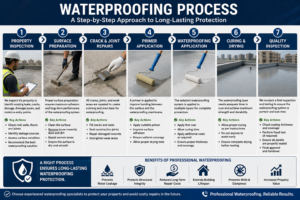
Step-by-Step Waterproofing Process
Professional waterproofing is far more than simply applying a protective coating. A systematic process ensures that every surface is properly prepared and protected for long-lasting performance. Investing in modern building waterproofing solutions protects your property from heavy rain damage. Step 1: Property Inspection
The first step involves identifying:
- Existing leaks
- Damaged waterproofing
- Surface cracks
- Drainage issues
- Moisture entry points
This assessment determines the most suitable waterproofing solution.
Step 2: Surface Preparation
Proper preparation is essential for strong adhesion.
Typical tasks include:
- Cleaning surfaces
- Removing loose material
- Repairing cracks
- Levelling uneven areas
- Eliminating dust and debris
Skipping this stage often leads to waterproofing failure.
Step 3: Crack and Joint Repairs
Before waterproofing begins, technicians repair:
- Concrete cracks
- Construction joints
- Expansion joints
- Surface defects
This creates a solid base for the waterproofing system.
Step 4: Primer Application
A primer improves the bond between the substrate and the waterproofing membrane.
It also helps create a uniform application surface.
Step 5: Waterproofing Application
Depending on the project, specialists may apply:
- Cementitious coatings
- Liquid membranes
- Bituminous membranes
- Polyurethane systems
Multiple coats are often applied to achieve the required protection.
Step 6: Curing and Drying
The waterproofing system must cure according to the manufacturer’s recommendations.
Proper curing ensures:
- Maximum adhesion
- Full flexibility
- Long-term durability
Step 7: Quality Inspection
After curing, the completed waterproofing system is inspected to verify:
- Uniform coverage
- Membrane thickness
- Joint sealing
- Surface integrity
- Overall workmanship
Only after successful inspection is the project considered complete.
Common Waterproofing Materials
Modern waterproofing systems rely on advanced materials that provide reliable protection against moisture intrusion.
Frequently Used Materials
- Cementitious waterproof coatings
- Bituminous membranes
- Polyurethane coatings
- Liquid waterproof membranes
- Acrylic waterproof coatings
- PVC membranes
- EPDM membranes
- Waterproof sealants
- Injection grouts
- Protective primers
Each material is selected based on the building’s requirements, environmental conditions, and expected performance.
Common Waterproofing Mistakes to Avoid
Many waterproofing failures result from avoidable mistakes rather than defective materials.
Some of the most common errors include:
- Ignoring small leaks
- Delaying repairs
- Choosing the cheapest contractor
- Using low-quality materials
- Skipping surface preparation
- Applying insufficient membrane thickness
- Poor drainage planning
- Failing to inspect waterproofing regularly
- Waterproofing only damaged areas instead of the complete vulnerable surface
- Attempting complex waterproofing as a DIY project
Avoiding these mistakes significantly improves the lifespan and effectiveness of any waterproofing system.
Preventive Waterproofing Maintenance Tips
Preventive maintenance is the best way to maximize the life of your waterproofing investment.
Consider following these practical recommendations:
- Inspect roofs at least once a year.
- Clean roof and terrace drains regularly.
- Repair small cracks immediately.
- Check balconies after heavy rain.
- Monitor bathrooms for hidden leaks.
- Reapply protective coatings when recommended.
- Schedule professional waterproofing inspections every few years.
- Address plumbing leaks without delay.
- Remove standing water from terraces and roofs.
- Keep expansion joints clean and properly sealed.
Regular maintenance not only reduces repair costs but also helps preserve your property’s structural integrity and appearance.
At Sahab Tech Group LLC, our waterproofing specialists combine these preventive practices with comprehensive Civil Work Services, Property Maintenance, Plumbing Services, Bathroom Renovation, and Interior Renovation solutions. By addressing moisture issues early and coordinating related maintenance under one experienced team, we help property owners avoid costly structural repairs while extending the lifespan of their buildings.
Estimated Building Waterproofing Costs in Dubai
One of the most common questions property owners ask before starting a waterproofing project is, “How much does building waterproofing cost in Dubai?” The answer depends on several factors, including the area being treated, the waterproofing system selected, the condition of the surface, and the overall project size.
For example, waterproofing a small residential bathroom is significantly different from waterproofing an entire commercial roof or basement. Similarly, repairing localized leaks generally costs less than replacing a failed waterproofing system across a large area.
Although prices vary from project to project, the table below provides realistic market estimates to help you plan your budget.
Estimated Waterproofing Prices in Dubai (2026)
| Waterproofing Service | Estimated Cost (AED) |
|---|---|
| Roof Waterproofing | 45 – 120 per sq. m. |
| Terrace Waterproofing | 40 – 110 per sq. m. |
| Balcony Waterproofing | 35 – 90 per sq. m. |
| Bathroom Waterproofing | 30 – 80 per sq. m. |
| Basement Waterproofing | 120 – 300 per sq. m. |
| Foundation Waterproofing | 90 – 250 per sq. m. |
| Exterior Wall Waterproofing | 35 – 90 per sq. m. |
| Water Tank Waterproofing | 1,500 – 6,000+ |
| Crack Injection Waterproofing | 350 – 1,200 per crack |
| Waterproofing Inspection | 250 – 700 |
| Complete Building Waterproofing | Starting from 5,000+ |
Note: These prices represent average market estimates in Dubai. The final quotation depends on the property’s condition, waterproofing method, material quality, accessibility, labour requirements, and project complexity.
Factors That Affect Waterproofing Costs
Understanding what influences the cost of Building Waterproofing allows property owners to make informed decisions and compare quotations more effectively.
1. Size of the Area
Naturally, larger roofs, terraces, basements, and commercial properties require more waterproofing material and labour, increasing the total project cost.
2. Waterproofing System
Different systems have different installation requirements and life expectancies.
For example:
- Cementitious waterproofing is generally more economical.
- Polyurethane systems offer excellent flexibility but may cost more.
- Bituminous membranes are popular for roofs and foundations.
- Liquid-applied membranes provide seamless coverage for complex surfaces.
Selecting the right system should always be based on the building’s needs rather than price alone.
3. Surface Condition
If the substrate contains cracks, loose concrete, damaged plaster, or existing leaks, additional repairs will be required before waterproofing can begin.
Proper preparation ensures better adhesion and longer-lasting protection.
4. Material Quality
Premium waterproofing materials usually offer:
- Longer service life
- Better UV resistance
- Greater flexibility
- Stronger adhesion
- Reduced maintenance
Although they increase the initial investment, they often reduce long-term repair costs.
5. Labour and Accessibility
Projects involving high-rise buildings, confined spaces, or difficult roof access may require specialized equipment and additional labour, affecting the final quotation.
Waterproofing vs Damp Proofing
Many property owners confuse waterproofing with damp proofing. While both help protect buildings from moisture, they serve different purposes.
| Waterproofing | Damp Proofing |
| Prevents water penetration under pressure | Reduces moisture absorption |
| Suitable for roofs, basements, terraces, and bathrooms | Commonly used in walls and foundations |
| Creates a complete waterproof barrier | Provides limited moisture resistance |
| Protects against leaks and standing water | Protects against ground moisture |
| Recommended for Dubai’s climate and exposed areas | Often used as an additional protective layer |
For properties exposed to heavy moisture or direct water contact, full waterproofing provides significantly better long-term protection.
Interior vs Exterior Waterproofing
Both methods are valuable, but each is designed for different situations.
| Interior Waterproofing | Exterior Waterproofing |
| Applied inside the building | Applied on external surfaces |
| Controls internal moisture | Stops water before it enters |
| Suitable for bathrooms and internal walls | Ideal for roofs, basements, terraces, and exterior walls |
| Often used during renovations | Frequently installed during new construction |
| Easier to access for small repairs | Offers more comprehensive protection |
Many modern buildings benefit from combining both systems for maximum durability.
Bituminous vs Polyurethane Waterproofing
Selecting the right waterproofing membrane depends on the project requirements.
| Bituminous Waterproofing | Polyurethane Waterproofing |
| Asphalt-based membrane | Liquid-applied coating |
| Excellent for roofs and foundations | Highly flexible for exposed surfaces |
| Strong water resistance | Superior crack-bridging capability |
| Cost-effective | Premium performance |
| Long service life | Excellent UV and weather resistance |
Professional assessment helps determine which solution best suits your property.
Cementitious vs Liquid Membrane Waterproofing
These are two of the most commonly used waterproofing systems in residential and commercial construction.
| Cementitious Waterproofing | Liquid Membrane Waterproofing |
| Cement-based coating | Flexible liquid coating |
| Easy application | Seamless waterproof layer |
| Ideal for bathrooms and water tanks | Excellent for roofs and terraces |
| Strong adhesion to concrete | Suitable for irregular surfaces |
| Cost-effective | High flexibility and durability |
Each system offers unique advantages depending on the application and environmental conditions.
DIY vs Professional Waterproofing
Although DIY waterproofing products are widely available, professional installation provides greater reliability and long-term performance.
| DIY Waterproofing | Professional Waterproofing |
| Lower initial cost | Higher long-term value |
| Limited technical knowledge | Experienced waterproofing specialists |
| Basic equipment | Professional tools and application methods |
| Greater risk of application errors | Correct surface preparation and installation |
| No workmanship guarantee | Quality assurance and dependable support |
| Suitable only for very minor maintenance | Recommended for residential and commercial projects |
For structural waterproofing, roofs, terraces, basements, and large-scale applications, professional installation is strongly recommended.
How to Choose the Right Waterproofing Contractor
The quality of a waterproofing project depends not only on the materials used but also on the expertise of the contractor.
When selecting a waterproofing company, consider the following:
Look for Industry Experience
Choose contractors with a proven track record in residential, commercial, and industrial waterproofing projects.
Verify Material Quality
Reliable contractors use high-performance waterproofing membranes, primers, sealants, and coatings from reputable manufacturers.
Request a Detailed Inspection
A professional contractor should inspect the property before recommending a solution or preparing a quotation.
Compare Transparent Quotations
The quotation should clearly outline:
- Scope of work
- Waterproofing system
- Materials
- Labour costs
- Estimated timeline
- Warranty details
Review Previous Projects
Ask to see examples of completed waterproofing work to assess workmanship and attention to detail.
Choose Comprehensive Service Providers
Working with a company that also offers Civil Work Services, Property Maintenance, Plumbing Services, and renovation solutions helps ensure that any related structural or maintenance issues are addressed efficiently.
How Waterproofing Increases Property Value
Building waterproofing is more than a maintenance expense—it is an investment that protects and enhances the long-term value of a property.
Professional waterproofing can:
- Reduce future repair costs
- Increase buyer confidence
- Improve building durability
- Protect expensive interior finishes
- Prevent structural deterioration
- Minimize maintenance disruptions
- Enhance tenant satisfaction
- Support higher resale value
For investors and property managers, these advantages contribute to stronger long-term returns and lower ownership costs.
Frequently Overlooked Waterproofing Areas
While roofs and bathrooms often receive the most attention, several other locations are equally vulnerable to water damage.
Property owners should also inspect:
- Expansion joints
- Window perimeters
- Door thresholds
- Air-conditioning service penetrations
- Pipe penetrations
- External wall joints
- Utility rooms
- Elevator pits
- Parking decks
- Mechanical rooms
Ignoring these areas can allow hidden leaks to develop over time.
Why Choose Sahab Tech Group LLC?
Choosing the right waterproofing contractor is essential for protecting your property against costly water damage. At Sahab Tech Group LLC, we combine technical expertise with high-quality materials to deliver dependable waterproofing solutions tailored to each project.
With 15+ years of industry experience, our team provides professional waterproofing services for residential, commercial, and industrial properties throughout Dubai.

Our Waterproofing Services Include:
- Roof Waterproofing
- Terrace Waterproofing
- Basement Waterproofing
- Bathroom Waterproofing
- Balcony Waterproofing
- Foundation Waterproofing
- Exterior Wall Waterproofing
- Concrete Waterproofing
- Water Tank Waterproofing
- Crack Injection Waterproofing
- Waterproofing Inspections
- Preventive Waterproofing Maintenance
In addition to waterproofing, we provide integrated property improvement solutions, including:
- Civil Work Services
- Property Maintenance
- Plumbing Services
- HVAC Services
- Electrical Services
- Bathroom Renovation
- Interior Design
- Apartment Renovation
This comprehensive approach allows clients to manage multiple building maintenance and renovation requirements through one experienced and reliable contractor.
Why Property Owners Choose Sahab Tech Group LLC
| Feature | Benefit |
| 15+ Years of Experience | Proven expertise across residential and commercial projects |
| Certified Waterproofing Specialists | Professional installation and long-lasting results |
| Premium Materials | Durable systems designed for Dubai’s climate |
| Comprehensive Property Services | Civil work, maintenance, plumbing, and renovation under one roof |
| Transparent Quotations | Clear pricing with no hidden surprises |
| Dubai-Wide Service Coverage | Reliable support across the emirate |
| Customer-Focused Approach | Tailored waterproofing solutions for every property |
Ready to Protect Your Property?
Water damage rarely fixes itself. In fact, delaying waterproofing often leads to more extensive repairs, higher maintenance costs, and unnecessary disruption.
Whether you’re constructing a new building, renovating an existing property, or addressing persistent leaks, investing in professional Building Waterproofing is one of the most effective ways to safeguard your investment.
At Sahab Tech Group LLC, we deliver reliable waterproofing solutions designed to protect residential, commercial, and industrial properties from moisture damage while improving durability and long-term value.
📞 Contact Sahab Tech Group LLC Today
Call +971 56 756 7243 to schedule a professional waterproofing inspection, request a detailed quotation, or discuss the most suitable waterproofing solution for your property. Our experienced specialists proudly serve clients across Dubai with dependable, high-quality waterproofing services.
Conclusion
Building waterproofing plays a vital role in protecting every type of property from water intrusion, structural deterioration, and costly repairs. From roofs and terraces to bathrooms, basements, foundations, and exterior walls, a properly designed waterproofing system helps preserve the integrity, safety, and appearance of your building.
Moreover, preventive waterproofing is far more cost-effective than repairing extensive water damage after leaks develop. Regular inspections, timely maintenance, and high-quality waterproofing materials significantly reduce long-term expenses while extending the lifespan of the property.
Whether you own a villa, apartment, office, warehouse, or commercial facility, investing in professional Building Waterproofing Solutions is a practical decision that protects your property, enhances its value, and provides lasting peace of mind.
FAQs
1. What is building waterproofing?
Building waterproofing is the process of applying protective systems and materials to prevent water from penetrating roofs, walls, basements, bathrooms, terraces, foundations, and other structural elements.
2. Why is waterproofing important?
Waterproofing helps prevent leaks, protects structural components, reduces maintenance costs, minimizes mould growth, and extends the lifespan of a property.
3. Which areas of a building require waterproofing?
Common areas include roofs, terraces, balconies, bathrooms, basements, foundations, exterior walls, water tanks, and other locations exposed to moisture or standing water.
4. How long does building waterproofing last?
The lifespan depends on the waterproofing system, material quality, environmental conditions, and maintenance. Professionally installed systems can often provide reliable protection for many years when properly maintained.
5. How much does waterproofing cost in Dubai?
Costs vary depending on the project type, area size, materials, and complexity. Small waterproofing projects may cost a few hundred dirhams, while large-scale building waterproofing can require a significantly higher investment.
6. Can waterproofing increase property value?
Yes. Effective waterproofing protects structural integrity, reduces future maintenance costs, improves buyer confidence, and contributes to higher resale and rental value.
7. Why should I choose Sahab Tech Group LLC for waterproofing in Dubai?
With over 15 years of experience, Sahab Tech Group LLC provides professional waterproofing services using premium materials, skilled specialists, transparent pricing, and comprehensive property maintenance solutions for residential, commercial, and industrial clients across Dubai.