
Signs Your Building Has Hidden Water Damage
Identifying early signs of hidden water damage is critical to preventing costly structural issues. Water damage doesn’t always announce itself with a dripping ceiling or a flooded floor. In many cases, moisture silently spreads behind walls, beneath flooring, above ceilings, or inside structural components long before visible signs appear. By the time you notice the problem, the damage may already be extensive, leading to expensive repairs and potential structural issues.
If your building has hidden water damage, acting quickly can save thousands of dirhams in repair costs while protecting the safety, comfort, and value of your property.
Whether you own a villa, apartment, townhouse, office, warehouse, retail space, or commercial building, hidden water damage can affect any property. It often starts with something as simple as a small plumbing leak, damaged waterproofing, roof seepage, or poor drainage. However, if ignored, it can gradually weaken concrete, damage finishes, promote mould growth, and even compromise structural integrity.
In Dubai, buildings face unique environmental conditions, including intense heat, humidity, occasional heavy rainfall, and constant air-conditioning usage. These factors can accelerate the deterioration of waterproofing systems and make professional Water Leak Detection, Property Maintenance Dubai, and Building Inspection Dubai services more important than ever.
In this comprehensive guide, you’ll learn how to identify hidden water damage before it becomes a major problem, understand its causes, recognize the warning signs, and discover the best ways to protect your property through preventive maintenance and professional repair solutions.
At Sahab Tech Group LLC, we provide expert Waterproofing Services Dubai, leak detection, plumbing repairs, civil work, and complete property maintenance solutions. With more than 15 years of experience, our team helps residential, commercial, and industrial property owners identify hidden moisture problems early and implement long-lasting repair solutions.
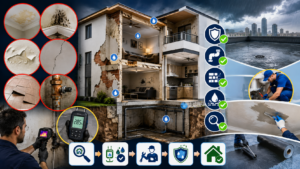
What Is Hidden Water Damage?
Hidden water damage refers to moisture that develops inside a building where it cannot be easily seen during normal daily activities. Unlike obvious leaks or flooding, hidden water damage often remains unnoticed for weeks or even months while slowly affecting structural components and interior finishes.
This type of damage usually occurs behind:
- Interior walls
- Exterior walls
- Ceiling cavities
- Floor finishes
- Roof structures
- Basements
- Foundations
- Bathrooms
- Kitchens
- Utility rooms
Because these areas are not regularly visible, water continues to spread without immediate detection.
Hidden moisture can originate from several sources, including:
- Leaking plumbing pipes
- Damaged waterproofing membranes
- Roof leaks
- Cracked exterior walls
- Faulty drainage systems
- Air-conditioning condensation
- Bathroom leakage
- Balcony seepage
- Basement moisture infiltration
Over time, continuous exposure to moisture weakens construction materials, allowing problems to spread well beyond the original leak.
Fortunately, modern Water Leak Detection techniques enable professionals to identify hidden moisture before significant structural damage occurs.
Why Hidden Water Damage Is Dangerous
Many property owners underestimate small leaks because they don’t see immediate damage. Unfortunately, hidden moisture rarely remains in one location. Instead, it gradually spreads through porous materials such as concrete, plaster, drywall, insulation, and masonry.
As a result, what begins as a minor leak can eventually require extensive repairs.
Below are the primary reasons why hidden water damage should never be ignored.
1. Weakens Structural Components
Water gradually penetrates concrete, mortar, and masonry.
As moisture reaches steel reinforcement inside concrete structures, corrosion begins to develop. Since rust expands, it places additional pressure on the surrounding concrete, eventually leading to:
- Surface cracking
- Concrete spalling
- Structural weakening
- Reduced durability
Professional inspections help identify these issues before they become major structural concerns.
2. Encourages Mould and Mildew Growth
Moisture trapped behind walls or ceilings creates ideal conditions for mould growth.
Once established, mould can spread rapidly through:
- Drywall
- Ceiling cavities
- Wooden structures
- Carpets
- Insulation
Besides affecting the appearance of a property, mould can produce unpleasant odours and reduce indoor air quality.
3. Damages Interior Finishes
Hidden water damage often affects expensive interior finishes long before structural problems become visible.
Common damage includes:
- Peeling paint
- Bubbling wallpaper
- Swollen wooden flooring
- Warped cabinetry
- Damaged gypsum ceilings
- Loose tiles
Repairing these finishes frequently costs much more than addressing the original leak early.
4. Increases Maintenance Costs
The longer water damage remains untreated, the more extensive repairs become.
For example, a small plumbing leak may eventually require:
- Ceiling replacement
- Wall reconstruction
- Flooring replacement
- Waterproofing
- Plumbing repairs
- Mould remediation
Preventive maintenance is almost always more cost-effective than emergency restoration.
5. Reduces Property Value
Visible signs of water damage can negatively impact the market value of both residential and commercial properties.
Potential buyers or tenants may view water stains, damp walls, or mould as indicators of poor maintenance, leading to reduced confidence and lower property value.
Regular inspections and timely repairs help preserve your investment.
Why Early Detection Matters
| Benefit | Why It Is Important |
|---|---|
| Prevents Structural Damage | Protects concrete, steel reinforcement, and foundations |
| Reduces Repair Costs | Stops minor leaks before major repairs are needed |
| Improves Indoor Air Quality | Helps prevent mould and moisture-related issues |
| Extends Building Lifespan | Preserves structural integrity over time |
| Protects Interior Finishes | Prevents damage to paint, flooring, ceilings, and furniture |
| Maintains Property Value | Keeps the building attractive to buyers and tenants |
Top Signs Your Building Has Hidden Water Damage
Although hidden water damage is not always visible, buildings usually provide early warning signs. Recognizing these symptoms allows property owners to arrange professional inspections before the problem becomes more severe.
Below are the most common indicators that your building has hidden water damage.
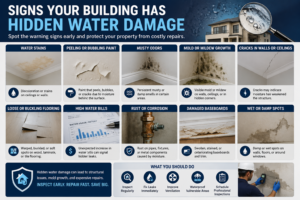
1. Water Stains on Walls or Ceilings
One of the earliest warning signs is the appearance of yellow, brown, or dark stains on painted surfaces.
These stains often indicate:
- Roof leaks
- Plumbing leaks
- Bathroom seepage
- Terrace waterproofing failure
- Balcony water infiltration
Even if the stain appears dry, moisture may still be spreading behind the surface.
2. Peeling or Bubbling Paint
When water becomes trapped behind painted walls, the paint gradually loses adhesion.
Common symptoms include:
- Peeling paint
- Bubbling paint
- Blistering
- Cracking
- Discolouration
These signs often indicate ongoing moisture rather than simple cosmetic wear.
3. Persistent Damp Patches
Damp areas that remain visible even during dry weather should never be ignored.
They may appear on:
- Walls
- Ceilings
- Basement floors
- Exterior facades
Persistent dampness usually indicates hidden moisture within the building envelope.
4. Musty or Damp Odours
If your property has a persistent damp smell despite regular cleaning, hidden moisture may be trapped behind walls, under flooring, or above ceilings.
Musty odours are commonly associated with:
- Hidden mould
- Water-soaked insulation
- Damp drywall
- Moist concrete
These smells often develop before visible mould appears.
5. Mould Growth
Visible mould is one of the clearest signs that excessive moisture exists somewhere within the building.
Common locations include:
- Bathroom ceilings
- Kitchen walls
- Air-conditioning ducts
- Window frames
- Basements
- Utility rooms
Even small patches of mould deserve professional attention because they often indicate a larger hidden moisture problem.
6. Cracks in Walls or Ceilings
Although cracks can result from natural settlement, moisture often accelerates their development.
Watch for:
- Expanding wall cracks
- Ceiling cracks
- Concrete cracks
- Exterior façade cracks
If cracks are accompanied by dampness or staining, water intrusion should be investigated immediately.
7. Loose or Hollow Floor Tiles
Moisture beneath tiled surfaces gradually weakens the adhesive bond.
Warning signs include:
- Hollow sounds when walking
- Loose tiles
- Cracked grout
- Uneven flooring
Ignoring these symptoms can lead to more extensive flooring repairs.
8. Unusually High Water Bills
A sudden increase in water consumption without changes in usage may indicate a hidden plumbing leak.
Professional leak detection equipment can identify concealed leaks without unnecessary demolition.
9. Rust Around Metal Fixtures
Water exposure frequently causes corrosion around:
- Steel columns
- Reinforcement bars
- Pipe fittings
- Door frames
- Metal supports
Rust is often an early indicator of long-term moisture exposure.
10. Damaged Skirting Boards or Wooden Fixtures
Wood naturally absorbs moisture.
As hidden water damage progresses, you may notice:
- Swollen skirting boards
- Warped doors
- Soft wooden cabinets
- Damaged furniture
- Buckled laminate flooring
These changes often point to moisture trapped beneath the surface.
Hidden Water Damage Warning Signs Checklist
Use this quick checklist to inspect your property regularly:
- □ Water stains on ceilings
- □ Damp walls
- □ Bubbling or peeling paint
- □ Persistent musty smell
- □ Visible mould growth
- □ Loose or hollow tiles
- □ Cracks with moisture stains
- □ Rust around metal fixtures
- □ Warped wooden finishes
- □ Sudden increase in water bills
- □ Damp basement walls
- □ Moisture around windows or doors
If you identify several of these warning signs, scheduling a professional building inspection is highly recommended.
Where Hidden Water Damage Usually Occurs
Hidden water damage can develop almost anywhere, but certain areas are far more vulnerable because of frequent water exposure, plumbing systems, or weather conditions.
Bathrooms
Bathrooms experience daily moisture from showers, sinks, bathtubs, and toilets.
Without proper waterproofing, water can seep beneath tiles and behind walls, gradually damaging adjacent rooms.
Kitchens
Hidden plumbing connections beneath sinks and behind appliances make kitchens another common source of concealed leaks.
Slow pipe leaks often remain unnoticed until cabinets or flooring become damaged.
Roofs
Damaged roofing materials, blocked drainage outlets, or deteriorated waterproofing membranes allow rainwater to enter ceiling cavities.
This often results in hidden moisture that spreads across multiple rooms.
Basements
Because basements are below ground level, they are particularly vulnerable to groundwater infiltration and inadequate drainage.
Professional waterproofing helps prevent long-term structural damage in these areas.
Balconies and Terraces
Cracked grout, damaged waterproofing membranes, or poor drainage can allow water to penetrate concrete slabs, eventually causing leaks in the rooms below.
Exterior Walls
Hairline cracks, failed sealants, or deteriorated exterior finishes may allow rainwater and humidity to enter the building envelope.
These leaks often remain hidden until paint begins to peel or interior walls become damp.
Around Windows and Doors
Improper sealing around window and door frames is another common entry point for water.
Over time, moisture can damage plaster, paint, insulation, and surrounding finishes.
Plumbing Shafts and Utility Rooms
Hidden plumbing systems inside service shafts frequently develop slow leaks that remain unnoticed until substantial damage has occurred.
Regular inspections significantly reduce this risk.
Common Causes of Hidden Water Damage
Hidden water damage rarely happens without a reason. In most cases, it begins with a minor issue that goes unnoticed or is ignored until it develops into a much larger problem. Fortunately, understanding the most common causes can help property owners take preventive action before costly repairs become necessary.
Whether you own a residential, commercial, or industrial property, identifying these risks early can significantly reduce long-term maintenance expenses.
1. Hidden Plumbing Leaks
One of the leading causes of hidden water damage is leaking plumbing concealed behind walls, beneath floors, or above ceilings.
Even a slow drip can release hundreds of litres of water over time, allowing moisture to spread through structural materials.
Common sources include:
- Burst water pipes
- Loose pipe connections
- Corroded plumbing lines
- Leaking valves
- Damaged water supply lines
- Hidden bathroom plumbing leaks
Since these leaks are often invisible, professional Water Leak Detection services are the most reliable way to locate them without unnecessary demolition.
2. Failed Waterproofing Systems
Waterproofing systems naturally deteriorate over time due to continuous exposure to sunlight, humidity, rain, and temperature changes.
Once the waterproof membrane begins to fail, water can slowly penetrate:
- Roof slabs
- Balconies
- Bathrooms
- Terraces
- Basements
- Exterior walls
Regular inspections and timely maintenance help extend the life of waterproofing systems while reducing repair costs.
3. Roof Leaks
Roofs are constantly exposed to harsh environmental conditions.
Common roofing issues include:
- Cracked waterproof membranes
- Broken roof tiles
- Damaged flashing
- Blocked drainage outlets
- Standing water
- Worn expansion joints
Initially, roof leaks may only affect insulation or ceiling cavities, making them difficult to detect until visible stains appear indoors.
4. Poor Drainage Systems
An ineffective drainage system allows water to accumulate around buildings instead of directing it safely away.
Over time, standing water may penetrate:
- Foundations
- Basement walls
- Exterior walls
- Parking areas
- Retaining walls
Proper drainage plays a vital role in preventing hidden moisture problems.
5. Air Conditioning Condensation
In Dubai’s climate, air-conditioning systems operate for much of the year.
Blocked condensate drains, damaged insulation, or leaking AC units can produce continuous moisture around ceilings and walls.
Without regular HVAC maintenance, condensation can become a hidden source of water damage.
6. Cracked Exterior Walls
Hairline cracks may appear harmless, but they often allow rainwater and humidity to enter the building envelope.
Repeated exposure gradually leads to:
- Damp interior walls
- Peeling paint
- Moisture behind plaster
- Mould development
Professional sealing and waterproofing prevent these problems from spreading.
7. Bathroom and Kitchen Leakage
Bathrooms and kitchens contain multiple plumbing connections, making them two of the most common sources of concealed leaks.
Typical problem areas include:
- Shower trays
- Floor drains
- Bathtubs
- Sink connections
- Dishwashers
- Washing machine supply lines
Without proper Bathroom Waterproofing, even small leaks can damage adjacent rooms.
8. Foundation Moisture
Groundwater can slowly penetrate foundations when waterproofing systems fail or drainage is inadequate.
Signs may not appear immediately, but long-term exposure increases the risk of structural deterioration.
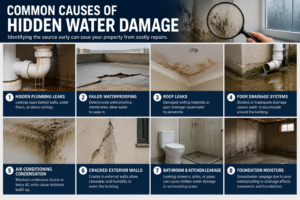
Common Causes of Hidden Water Damage
| Cause | Possible Consequences |
|---|---|
| Plumbing Leaks | Moisture behind walls and ceilings |
| Waterproofing Failure | Water penetration into structural elements |
| Roof Leaks | Ceiling stains and insulation damage |
| Poor Drainage | Foundation and basement moisture |
| AC Condensation | Damp ceilings and mould growth |
| Exterior Wall Cracks | Interior wall damage |
| Bathroom Leakage | Tile damage and hidden moisture |
| Foundation Seepage | Structural weakening |
Health Risks of Moisture and Mould
Hidden water damage affects more than just the building itself. Persistent moisture also creates an unhealthy indoor environment, particularly when mould begins to develop.
Although mould may initially appear as small dark spots, it often spreads rapidly through concealed spaces.
Poor Indoor Air Quality
Moisture trapped behind walls and ceilings can reduce indoor air quality by encouraging the growth of mould spores.
This becomes especially problematic in:
- Homes
- Offices
- Schools
- Healthcare facilities
- Hotels
Maintaining a dry building helps create a cleaner and healthier indoor environment.
Allergies and Respiratory Irritation
Exposure to mould and damp conditions may contribute to:
- Sneezing
- Coughing
- Eye irritation
- Nasal congestion
- Skin irritation
Individuals with asthma or respiratory sensitivities are often more vulnerable.
Unpleasant Odours
Persistent moisture frequently produces musty smells that spread throughout the building.
These odours usually indicate hidden moisture behind:
- Drywall
- Flooring
- Ceiling cavities
- Cabinets
- Insulation
Simply masking the smell will not solve the underlying problem.
Damage to Personal Belongings
Hidden moisture can also damage:
- Wooden furniture
- Documents
- Clothing
- Electronics
- Carpets
- Artwork
The longer water damage remains untreated, the greater the risk of permanent losses.
How Professionals Detect Hidden Water Damage
Because concealed moisture cannot always be identified through visual inspection alone, professionals use specialized equipment to locate leaks accurately while minimizing disruption to the property.
At Sahab Tech Group LLC, our experienced technicians combine detailed inspections with modern detection methods to identify the source of water intrusion before recommending the most appropriate repair solution.
Moisture Meters
Moisture meters measure the moisture content inside walls, ceilings, floors, and other building materials.
They help identify:
- Damp concrete
- Wet drywall
- Moist wooden structures
- Hidden leaks behind finished surfaces
Thermal Imaging Cameras
Infrared cameras detect subtle temperature differences caused by hidden moisture.
These cameras allow technicians to locate:
- Water behind walls
- Ceiling leaks
- Roof moisture
- Plumbing leaks
- Damp insulation
Because thermal imaging is non-destructive, large areas can be inspected quickly without opening walls unnecessarily.
Leak Detection Equipment
Advanced leak detection equipment identifies concealed plumbing leaks without damaging finished surfaces.
Depending on the situation, specialists may use:
- Acoustic listening devices
- Pressure testing
- Pipe tracing equipment
- Electronic leak detectors
This technology reduces repair costs by accurately locating the source of the leak.
Visual Building Inspections
Experienced inspectors also examine visible indicators, including:
- Ceiling stains
- Damp walls
- Surface cracks
- Peeling paint
- Loose tiles
- Rust marks
- Drainage issues
Combining visual assessments with specialized equipment provides the most accurate diagnosis.
Repair vs Replacement: Which Is the Better Option?
One of the most common questions property owners ask after discovering hidden water damage is whether repairs are sufficient or whether damaged materials should be completely replaced.
The answer depends on the severity of the damage, how long moisture has been present, and which building components have been affected.

When Repairs Are Usually Enough
Repairing the affected area is often appropriate when:
- The leak is detected early.
- Moisture has not caused structural deterioration.
- Damage is limited to a small area.
- Waterproofing can be restored.
- Plumbing repairs resolve the issue.
Prompt action can prevent the need for more extensive restoration work.
When Replacement Becomes Necessary
Replacement may be the better solution if:
- Structural materials are severely damaged.
- Mould has spread extensively.
- Ceilings have collapsed.
- Wooden flooring has warped beyond repair.
- Drywall has lost its structural integrity.
- Waterproofing systems have completely failed.
A professional assessment ensures the most practical and cost-effective decision.
Repair vs Replacement Comparison
| Repair | Replacement |
| Lower initial cost | Higher initial investment |
| Suitable for minor damage | Required for severe deterioration |
| Faster completion | Longer project duration |
| Preserves existing materials | Restores full structural integrity |
| Best for early detection | Necessary after extensive water exposure |
Common Homeowner Mistakes
Many cases of severe water damage could have been avoided if early warning signs had been addressed promptly.
Some of the most common mistakes include:
- Ignoring small leaks
- Assuming damp patches will dry on their own
- Painting over water stains instead of fixing the source
- Delaying waterproofing repairs
- Choosing the cheapest repair option without proper inspection
- Attempting major repairs without professional expertise
- Failing to inspect roofs and drainage systems regularly
- Neglecting routine plumbing maintenance
Avoiding these mistakes helps reduce repair costs while protecting the long-term condition of the property.
Emergency Steps After Discovering Hidden Water Damage
If you suspect your building has hidden water damage, taking immediate action can significantly reduce further deterioration.
Step 1: Identify Visible Warning Signs
Look for:
- Ceiling stains
- Damp walls
- Peeling paint
- Mould
- Musty odours
- Loose tiles
Documenting these symptoms will also assist during the inspection.
Step 2: Shut Off the Water Supply (If Necessary)
If a plumbing leak is suspected, isolate the affected water supply to prevent additional damage.
Step 3: Protect Furniture and Valuable Items
Move furniture, electronics, documents, and other valuable belongings away from the affected area whenever possible.
Step 4: Avoid Covering the Problem
Do not simply repaint damp walls or replace damaged finishes before identifying the source of the moisture.
Covering visible symptoms without resolving the underlying issue often leads to recurring damage.
Step 5: Schedule a Professional Inspection
Arrange a comprehensive inspection using modern leak detection equipment to determine:
- The source of the leak
- The extent of moisture intrusion
- Required waterproofing
- Necessary plumbing or civil work repairs
Professional diagnosis helps ensure that repairs address the root cause rather than just the visible symptoms.
At Sahab Tech Group LLC, our specialists provide comprehensive Building Inspection Dubai, Waterproofing Services Dubai, Plumbing Services, Civil Work Services, and Property Maintenance solutions. By combining advanced leak detection with long-term repair strategies, we help property owners resolve hidden water damage efficiently while protecting the value and safety of their buildings.
Estimated Water Damage Repair Costs in Dubai
One of the first questions property owners ask after discovering hidden water damage is, “How much will it cost to repair?” The answer depends on several factors, including the source of the leak, the extent of the damage, the affected building materials, and whether structural repairs or waterproofing are required.
For example, repairing a small plumbing leak behind a bathroom wall is considerably less expensive than restoring water-damaged ceilings, replacing flooring, removing mould, and repairing weakened concrete.
The good news is that identifying hidden water damage early can significantly reduce repair costs. A professional inspection allows technicians to resolve the issue before moisture spreads to additional areas.
Below are average market estimates to help you understand the potential investment.
Estimated Water Damage Repair Costs in Dubai (2026)
| Service | Estimated Cost (AED) |
|---|---|
| Water Damage Inspection | 250 – 700 |
| Moisture Testing | 300 – 800 |
| Professional Leak Detection | 400 – 1,200 |
| Ceiling Repair | 80 – 250 per sq. m. |
| Wall Repair & Repainting | 60 – 180 per sq. m. |
| Mould Removal & Treatment | 35 – 120 per sq. m. |
| Waterproofing Services | 40 – 120 per sq. m. |
| Plumbing Leak Repair | 300 – 2,500 |
| Structural Crack Repair | 500 – 3,500 |
| Concrete Repair | 120 – 450 per sq. m. |
| Complete Water Damage Restoration | Starting from 3,500+ |
Note: These figures represent estimated market ranges in Dubai. Actual costs vary depending on the size of the affected area, accessibility, severity of damage, repair methods, and material selection.
Factors That Affect Water Damage Repair Costs
Understanding what influences repair costs helps property owners make informed decisions and avoid unexpected expenses.
1. Extent of the Damage
Small, localized leaks are generally less expensive to repair than widespread moisture affecting multiple rooms or structural components.
2. Source of the Leak
Repair costs depend heavily on whether the problem originates from:
- Plumbing systems
- Roof leaks
- Waterproofing failure
- Drainage issues
- Foundation seepage
- Air-conditioning condensation
Finding and fixing the source is always the first priority.
3. Structural Involvement
If water has reached reinforced concrete, steel reinforcement, or load-bearing walls, repairs become more complex and typically require specialized civil work.
4. Mould Growth
When mould develops, additional cleaning, treatment, and restoration may be necessary before damaged finishes can be replaced.
5. Type of Property
Repair costs often differ between:
- Apartments
- Villas
- Commercial buildings
- Warehouses
- Offices
- Industrial facilities
Larger properties usually require more labour, materials, and inspection time.
Hidden Water Damage vs Visible Water Damage
Many property owners assume that if they cannot see water, there is no problem. However, hidden water damage is often more dangerous because it remains undetected while causing gradual deterioration.
| Hidden Water Damage | Visible Water Damage |
| Develops behind walls, ceilings, and floors | Clearly visible on surfaces |
| Difficult to detect without inspection | Easy to identify |
| Can spread unnoticed for months | Usually identified immediately |
| Often causes structural deterioration | Typically affects visible finishes first |
| Requires professional leak detection | May be diagnosed visually |
Water Damage vs Dampness
Although these terms are often used interchangeably, they are not the same.
| Water Damage | Dampness |
| Caused by active leaks or water intrusion | Usually caused by excess humidity or minor moisture |
| Can damage structural components | Often affects surface finishes |
| May require plumbing or waterproofing repairs | Often improved through ventilation and moisture control |
| Can lead to mould and concrete deterioration | Can develop into water damage if ignored |
DIY Inspection vs Professional Inspection
Many homeowners perform basic visual inspections, but hidden water damage often requires specialized equipment for accurate diagnosis.
| DIY Inspection | Professional Inspection |
| Limited to visible symptoms | Detects hidden moisture |
| No specialized equipment | Uses moisture meters and thermal imaging |
| Suitable for routine checks | Recommended for suspected leaks |
| May overlook concealed damage | Identifies the source accurately |
| Lower upfront cost | Helps prevent expensive future repairs |
Waterproofing vs Water Damage Repair
One of the biggest misconceptions is that waterproofing and water damage repair are the same service. In reality, they serve different purposes.
| Waterproofing | Water Damage Repair |
| Prevents water from entering the building | Repairs damage after water intrusion |
| Proactive solution | Corrective solution |
| Protects roofs, bathrooms, terraces, and foundations | Restores damaged walls, ceilings, floors, and structures |
| Reduces future maintenance costs | Addresses existing problems |
For the best long-term results, many properties require both waterproofing and repairs.
Building Inspection Checklist
Routine inspections help identify problems before they become expensive repairs.
Use this checklist every few months or after heavy rainfall.
Exterior Inspection
- □ Check the roof for damaged membranes or tiles.
- □ Inspect terraces and balconies for standing water.
- □ Examine exterior walls for cracks.
- □ Ensure gutters and drains are clear.
- □ Check waterproofing around windows and doors.
Interior Inspection
- □ Look for water stains on ceilings.
- □ Check walls for peeling paint.
- □ Inspect bathrooms for loose tiles.
- □ Smell for damp or musty odours.
- □ Look for mould around windows and corners.
- □ Examine skirting boards for swelling.
- □ Check flooring for warping or movement.
Plumbing Inspection
- □ Inspect visible pipes for leaks.
- □ Monitor water pressure changes.
- □ Compare monthly water bills for unusual increases.
- □ Listen for running water when no fixtures are in use.
Regular inspections make it much easier to detect hidden water damage before it spreads.
Long-Term Maintenance Tips to Prevent Hidden Water Damage
Preventive maintenance is always more affordable than major restoration work. By following a consistent maintenance plan, property owners can greatly reduce the risk of hidden water damage.
Schedule Regular Building Inspections
Professional inspections help identify small issues before they become costly structural problems.
Maintain Waterproofing Systems
Roofs, terraces, balconies, bathrooms, and basements should be inspected periodically to ensure waterproofing remains effective.
Service Plumbing Systems
Routine plumbing maintenance helps prevent concealed leaks behind walls and beneath floors.
Keep Roofs and Drains Clean
Blocked drainage outlets often lead to standing water, increasing the likelihood of leaks.
Monitor Humidity Levels
Excess humidity encourages condensation and mould growth, especially in poorly ventilated areas.
Repair Cracks Promptly
Even small cracks in walls or concrete should be repaired quickly to prevent water penetration.
Maintain HVAC Systems
Regular servicing of air-conditioning units helps prevent condensation leaks and moisture buildup.
Invest in Preventive Property Maintenance
Working with an experienced maintenance company ensures that waterproofing, plumbing, HVAC, electrical, and civil work are managed proactively rather than reactively.
Why Choose Sahab Tech Group LLC?
When it comes to protecting your property from hidden water damage, choosing the right contractor is just as important as fixing the leak itself.
At Sahab Tech Group LLC, we combine technical expertise, modern inspection methods, and high-quality repair solutions to help property owners identify and resolve hidden moisture problems before they become major structural issues.
With 15+ years of industry experience, we proudly provide reliable property maintenance and repair services across Dubai for residential, commercial, and industrial clients.
Our Services Include
- Water Damage Inspection
- Advanced Leak Detection
- Building Waterproofing
- Roof Waterproofing
- Bathroom Waterproofing
- Terrace Waterproofing
- Basement Waterproofing
- Plumbing Services
- Civil Work Services
- Concrete Repair
- Structural Crack Repair
- Property Maintenance
- HVAC Services
- Interior Renovation
- Bathroom Renovation
Whether you’re dealing with a small concealed leak or extensive structural water damage, our experienced team delivers practical, long-lasting solutions tailored to your property’s needs.

Why Property Owners Trust Sahab Tech Group LLC
| Feature | Benefit |
| 15+ Years of Experience | Trusted expertise across Dubai |
| Advanced Leak Detection | Accurate diagnosis with minimal disruption |
| Experienced Specialists | Skilled in waterproofing, plumbing, and civil work |
| Comprehensive Property Services | One contractor for inspection, repair, and maintenance |
| Premium Materials | Durable repairs designed for Dubai’s climate |
| Transparent Pricing | Honest quotations with no hidden costs |
| Dubai-Wide Service | Fast, reliable support across residential and commercial properties |
Protect Your Property Before Hidden Water Damage Gets Worse
Hidden water damage rarely improves on its own. In fact, delaying repairs often allows moisture to spread deeper into walls, ceilings, foundations, and structural components, leading to more extensive and expensive restoration work.
If you’ve noticed damp walls, ceiling stains, peeling paint, musty odours, mould growth, or unusually high water bills, don’t wait until the damage becomes visible throughout your property.
At Sahab Tech Group LLC, our specialists provide professional inspections, advanced leak detection, waterproofing, plumbing repairs, civil work, and complete property maintenance solutions designed to protect your investment and restore your peace of mind.
📞 Contact Sahab Tech Group LLC Today
Call +971 56 756 7243 to schedule a professional inspection, request a detailed quotation, or speak with our experts about the best solution for your property. We proudly serve homeowners, businesses, and property managers across Dubai with dependable, high-quality building maintenance services.
Conclusion
Hidden water damage is one of the most overlooked threats to residential and commercial properties. Because it often develops behind walls, ceilings, floors, and structural elements, it can remain unnoticed until significant damage has already occurred.
Fortunately, recognizing early warning signs such as damp patches, peeling paint, mould growth, musty odours, loose tiles, and unexplained increases in water bills allows property owners to act before repairs become more complex and costly.
Routine inspections, preventive maintenance, effective waterproofing, and timely plumbing repairs all play a crucial role in protecting your property from long-term moisture damage. Investing in professional inspections today can save substantial repair costs tomorrow while preserving the safety, durability, and value of your building.
FAQs
1. What is hidden water damage?
Hidden water damage refers to moisture that develops inside walls, ceilings, floors, roofs, or other concealed areas where it cannot be easily seen during normal inspections.
2. What are the first signs of hidden water damage?
Common warning signs include water stains, peeling paint, damp walls, musty odours, mould growth, loose floor tiles, warped wood, and unexpectedly high water bills.
3. Can hidden water damage affect a building’s structure?
Yes. If left untreated, long-term moisture can weaken concrete, corrode steel reinforcement, damage foundations, and reduce the overall structural integrity of a building.
4. How do professionals detect hidden water damage?
Specialists use advanced tools such as moisture meters, thermal imaging cameras, acoustic leak detection equipment, and detailed visual inspections to locate concealed leaks accurately.
5. Can hidden water damage cause mould?
Yes. Moisture trapped behind walls, ceilings, and flooring creates ideal conditions for mould and mildew growth, which can affect indoor air quality and damage building materials.